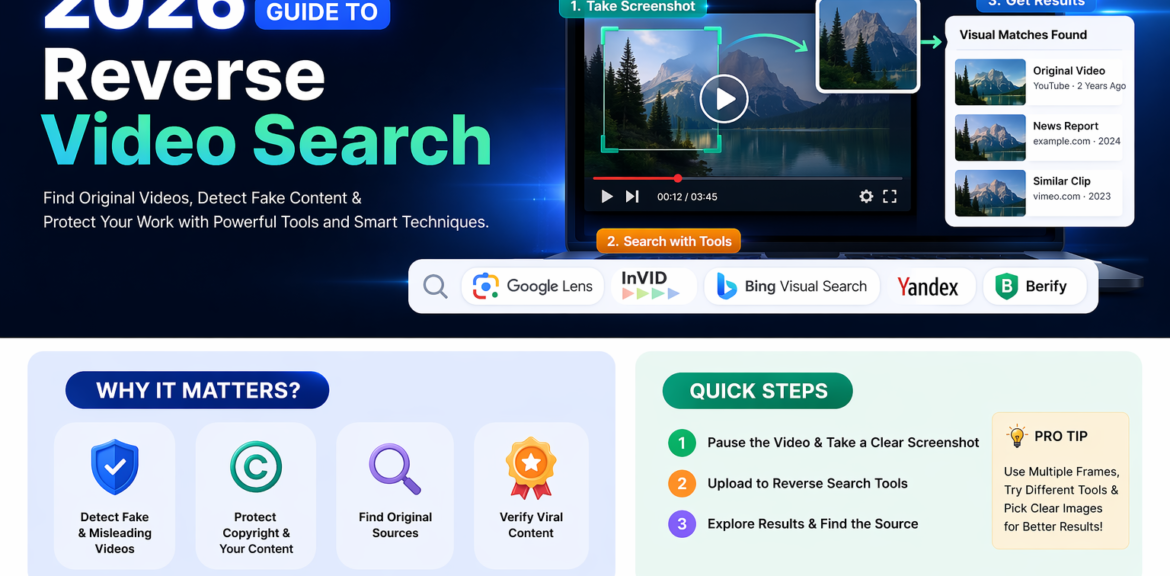

Reverse video search has become a critical tool in 2026 for verifying content, identifying sources, and protecting digital assets. With the rise of AI-generated videos and misinformation, using trusted tools and referencing authoritative platforms improves both credibility and SEO performance.
What Is Reverse Video Search?
Reverse video search is the process of finding the origin or similar versions of a video using visual clues like frames, objects, or faces.
Since search engines don’t fully support direct video uploads yet, tools like Google Lens help analyze screenshots and match them with indexed content across the web.
Learn more about how visual search works from Google:
https://lens.google/
Why Reverse Video Search Matters
According to Poynter Institute, visual verification is essential for identifying misinformation and fake news.
Reference: https://www.poynter.org/
Key Benefits:
- Detect fake or misleading videos
- Find original creators
- Verify viral content
- Prevent copyright theft
Best Tools for Reverse Video Search (With Trusted Sources)
Google Lens
Official Tool: https://lens.google/
- Fast and beginner-friendly
- Backed by Google AI
- Best for general searches
InVID
Official Plugin: https://www.invid-project.eu/tools-and-services/invid-verification-plugin/
- Used by journalists globally
- Frame extraction + metadata
- Recommended by fact-checkers
Supported by European Commission research projects
Berify
Official Site: https://www.berify.com/
- Tracks stolen content
- Helps creators protect videos
Bing Visual Search
Official: https://www.bing.com/visualsearch
Developed by Microsoft
Yandex
Official: https://yandex.com/images/
- Strong facial recognition
- Great for deep searches
Step-by-Step Process (SEO Optimized)
Method 1: Screenshot Search
- Pause video
- Take clear screenshot
- Upload to:
- Google Lens
- Bing Visual Search
- Analyze results
Method 2: Using InVID
- Paste video URL
- Extract frames
- Run reverse search
Learn verification techniques from First Draft News
https://firstdraftnews.org/
Pro SEO Tips (Outbound Linking Strategy)
To improve rankings:
- Link only to high authority sites (.org, .edu, official tools)
- Use relevant anchor text
- Don’t overstuff links (3–6 is ideal)
- Open links in new tab (target=”_blank”)
- Add nofollow for affiliate links
Example of trusted resource: Google Search Central
https://developers.google.com/search
Fake Video Detection
Reverse video search helps identify:
- Old videos reused as breaking news
- Edited or misleading clips
- Deepfake content
Fact-check using Snopes
https://www.snopes.com/
FAQs
1. Can I upload a video directly?
Most tools don’t support full uploads yet. Use screenshots or tools like InVID.
2. Which tool is most accurate?
Google Lens is best for general use, while Yandex works better for deep searches.
3. How to verify viral videos?
Use multiple tools + fact-check platforms like Snopes and Poynter Institute.
4. Are reverse video tools free?
Yes, most tools like Google Lens and Bing Visual Search are free.
Conclusion
Reverse video search is essential in 2026 for digital verification and content protection. By combining tools like Google Lens with authoritative sources such as Google Search Central, you not only improve accuracy but also strengthen your website’s SEO through high-quality outbound linking.