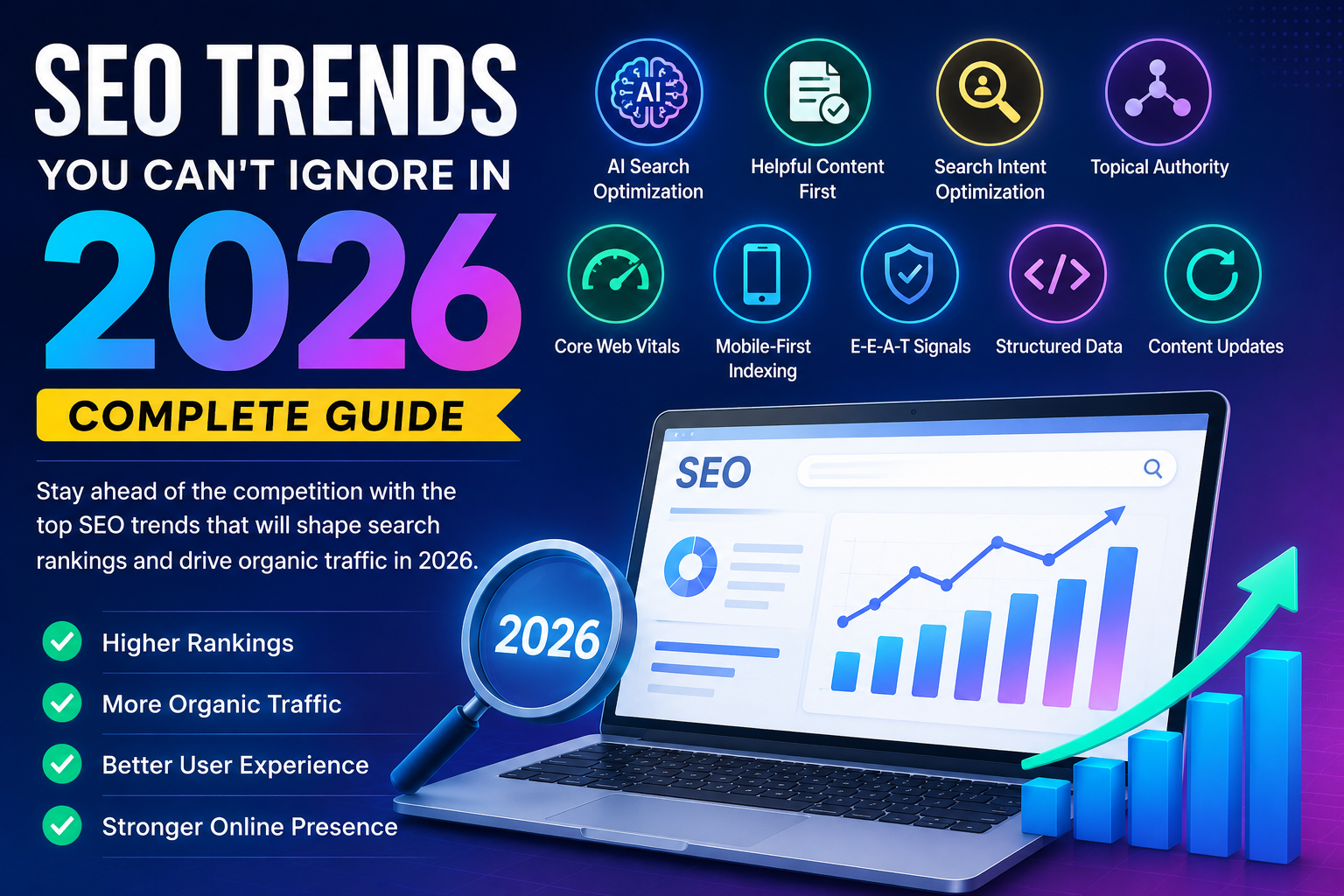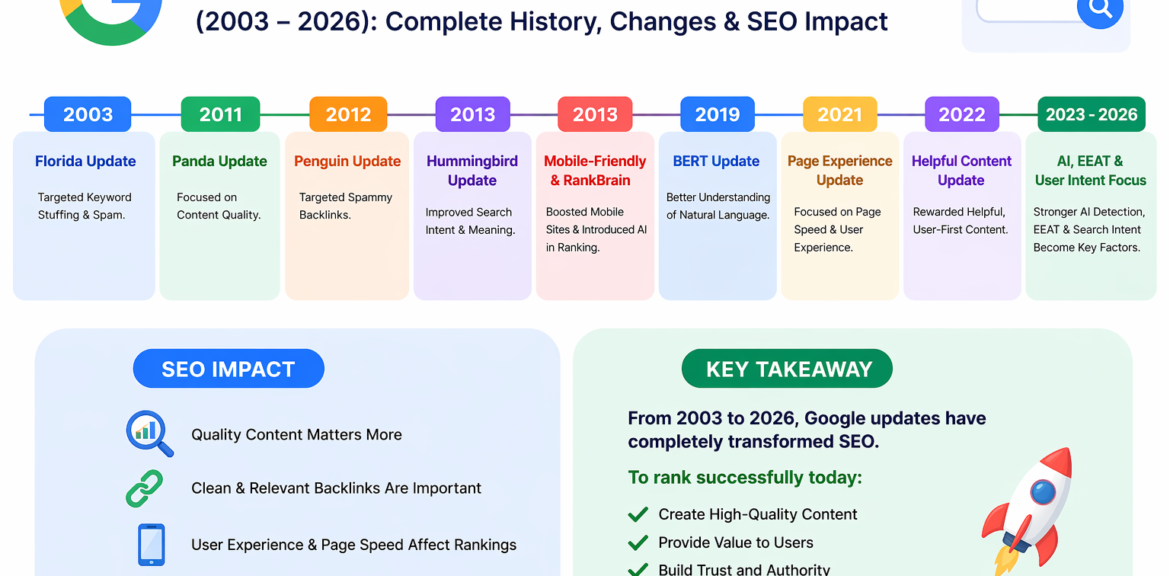

Google has continuously evolved its search algorithm to deliver better results. From the first major update in 2003 to AI-driven updates in 2026, each change has reshaped SEO strategies.
If you want to rank in Google today, understanding these updates is essential.
What Are Google Algorithm Updates?
Google algorithm updates are changes made by Google to improve search quality, remove spam, and rank helpful content higher.
Simple:
Updates = New ranking rules
Complete Timeline of Google Updates
2003 — Google Florida Update
- First major update
- Targeted keyword stuffing & spam
- Massive ranking drops
SEO shifted toward quality content
2011 — Google Panda Update
- Focus: Content quality
- Penalized thin & duplicate content
High-quality blogs became important
2012 — Google Penguin Update
- Targeted spammy backlinks
- Over-optimized anchor text penalized
Quality backlinks > quantity
2013 — Google Hummingbird Update
- Introduced semantic search
- Focus on search intent
Keywords → Intent-based SEO
2014 — Google Pigeon Update
- Improved local search results
- Boosted Google Maps integration
Local SEO became powerful
2015 — Google Mobile-Friendly Update
- Mobile-friendly sites ko boost
- Non-mobile sites down
Mobile SEO mandatory
2015 — Google RankBrain
- AI-based ranking system
- User behavior analysis
CTR & engagement important
2017 — Google Fred Update
- Targeted ad-heavy & low-value sites
Content + UX matters
2018 — Google Medic Update
- Focus on trust & authority
- Affected health/finance sites
EEAT concept stronger
2019 — Google BERT Update
- Better understanding of queries
- Context-based search
Natural writing important
2021 — Google Page Experience Update
- Page speed & UX ranking factor
- Core Web Vitals introduced
Technical SEO critical
2022 — Helpful Content Update
- Focus on helpful, human content
- AI spam penalized
Content quality = king
2023–2024 Core Updates
- Frequent core updates
- Strong spam detection
- AI content filtering improved
Consistent SEO required
2025–2026 (Latest Trends)
AI-Powered Search
- Google AI understands content deeply
- Detects low-quality AI content
EEAT Dominates
- Experience & trust signals matter more
Search Intent Focus
- Exact keyword se zyada intent important
Spam Control Strong
- Low-quality sites quickly downrank
Impact of Google Updates on SEO
Before:
- Keyword stuffing worked
- Spam backlinks worked
Now:
- Quality content wins
- User experience matters
- Trust & authority required
How to Stay Safe from Google Updates
1. High-Quality Content
- Unique, helpful, detailed
2. EEAT Optimization
- Author info
- Trust signals
- Real expertise
3. Technical SEO
- Fast website
- Mobile-friendly
4. Backlink Quality
- Avoid spam links
5. Regular Updates
- Content refresh karo
FAQs (Google Updates)
1. When was Google’s first update released?
Google’s first major algorithm update was released in 2003, known as the Google Florida Update.
2. Which are the most important Google updates?
The Google Panda Update and Google Penguin Update were the most impactful, as they completely transformed SEO by focusing on content quality and backlink authenticity.
3. What do the latest Google updates focus on?
Recent updates primarily focus on:
- AI-generated content quality
- User search intent
- EEAT (Experience, Expertise, Authority, Trust)
4. How can you avoid ranking drops after a Google update?
To stay safe from ranking drops:
- Create high-quality, valuable content
- Maintain clean and relevant backlinks
- Ensure a fast, user-friendly website experience
Conclusion
From 2003 to 2026, Google updates have completely transformed the way SEO works.
To rank successfully today:
- Focus on high-quality content
- Provide real value to users
- Build trust and authority
If you follow smart SEO strategies, Google updates are not a threat—they are an opportunity for growth.