
Introduction
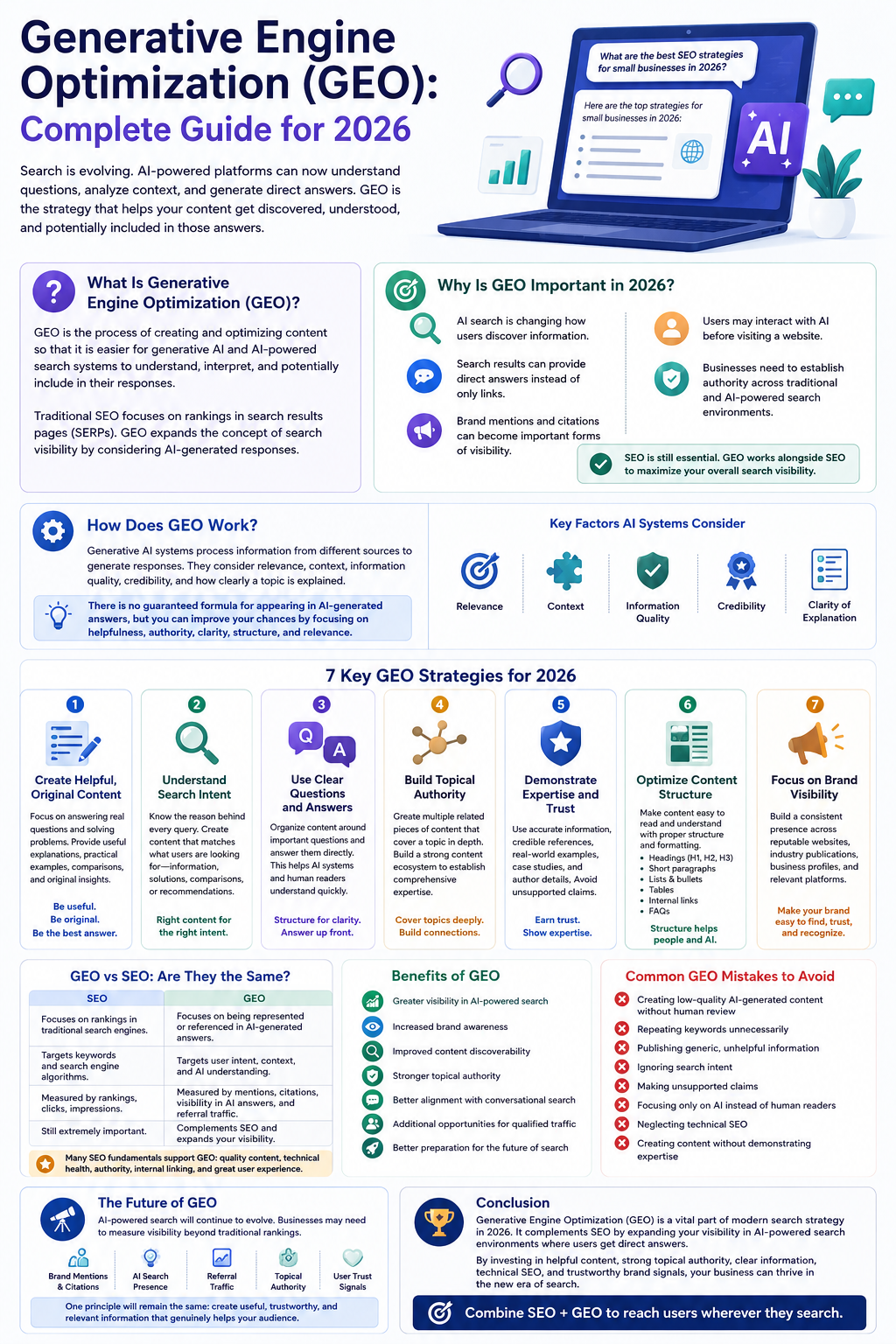
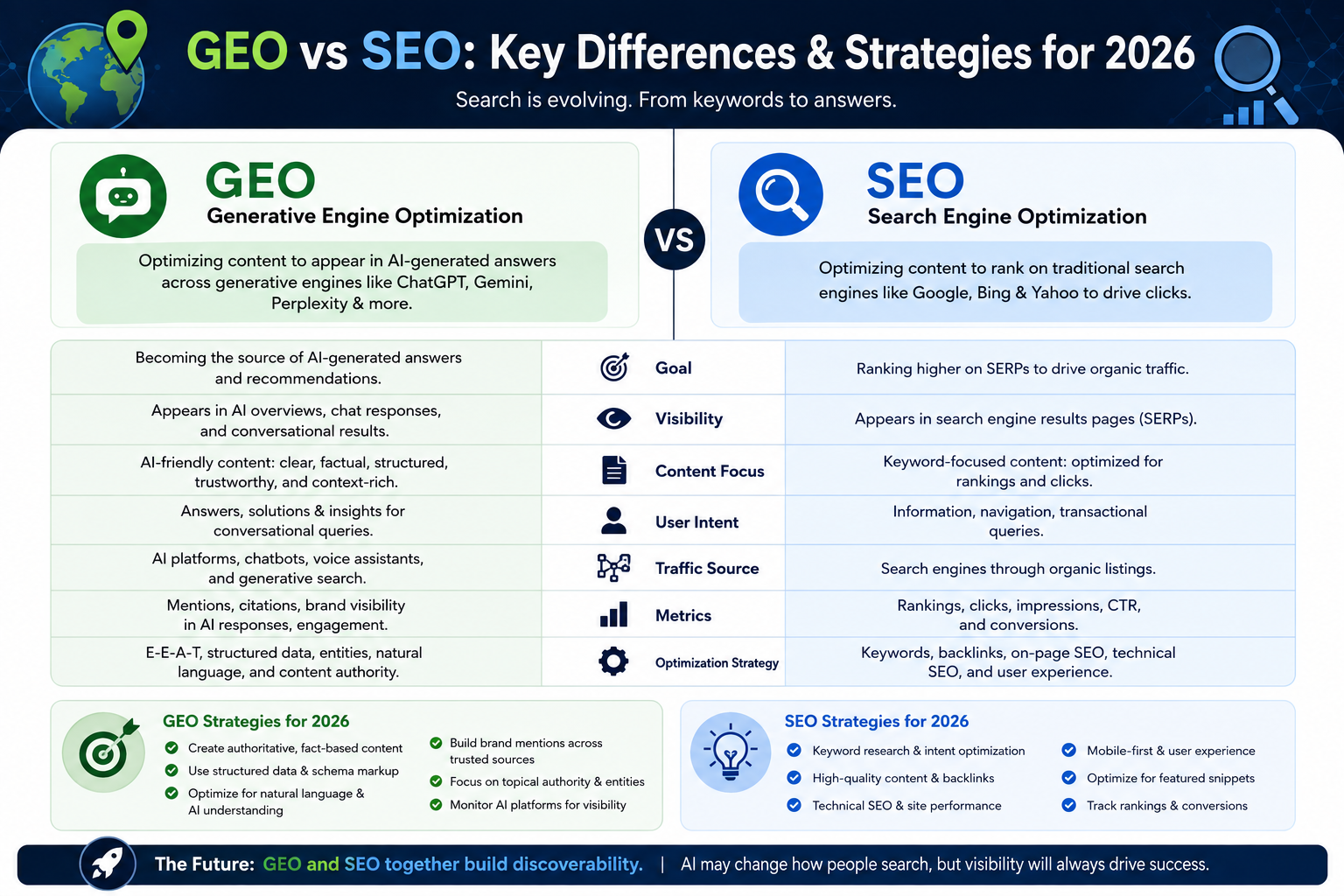
Search engine optimization is changing rapidly as artificial intelligence transforms the way people search for information online. Traditional SEO focused mainly on ranking webpages in search engine results pages (SERPs). In 2026, businesses also need to optimize their websites for AI-powered search experiences, including AI-generated answers, conversational search, and search engines that understand context and user intent.
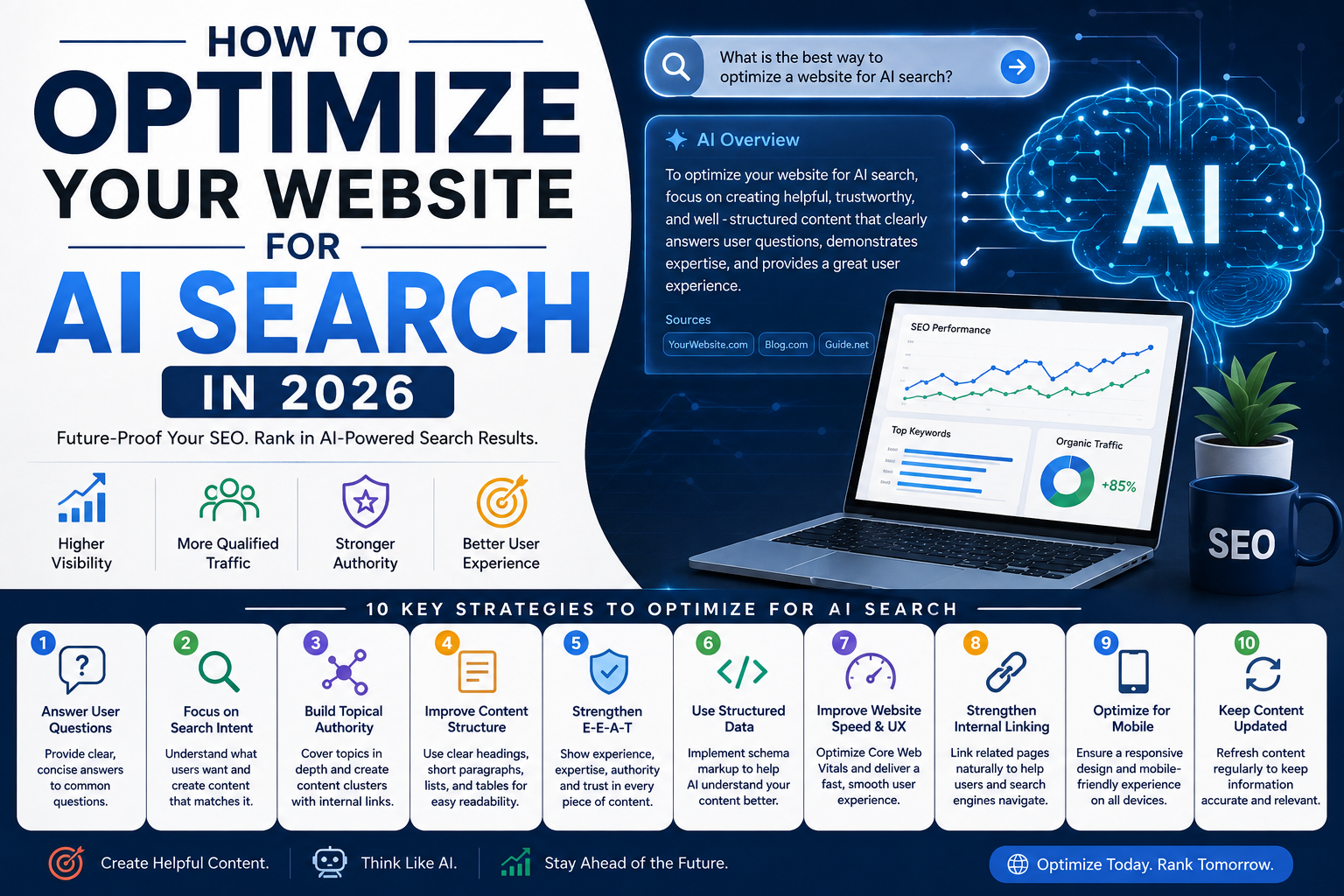
An effective AI SEO strategy combines traditional SEO practices with high-quality content, structured information, strong user experience, and optimization for AI-driven search. The goal is not only to rank higher but also to make your website more useful and trustworthy so that search engines and AI systems can understand and reference your content.
What Is an AI SEO Strategy?
An AI SEO strategy is an SEO approach designed to improve a website’s visibility across traditional search engines and AI-powered search platforms.
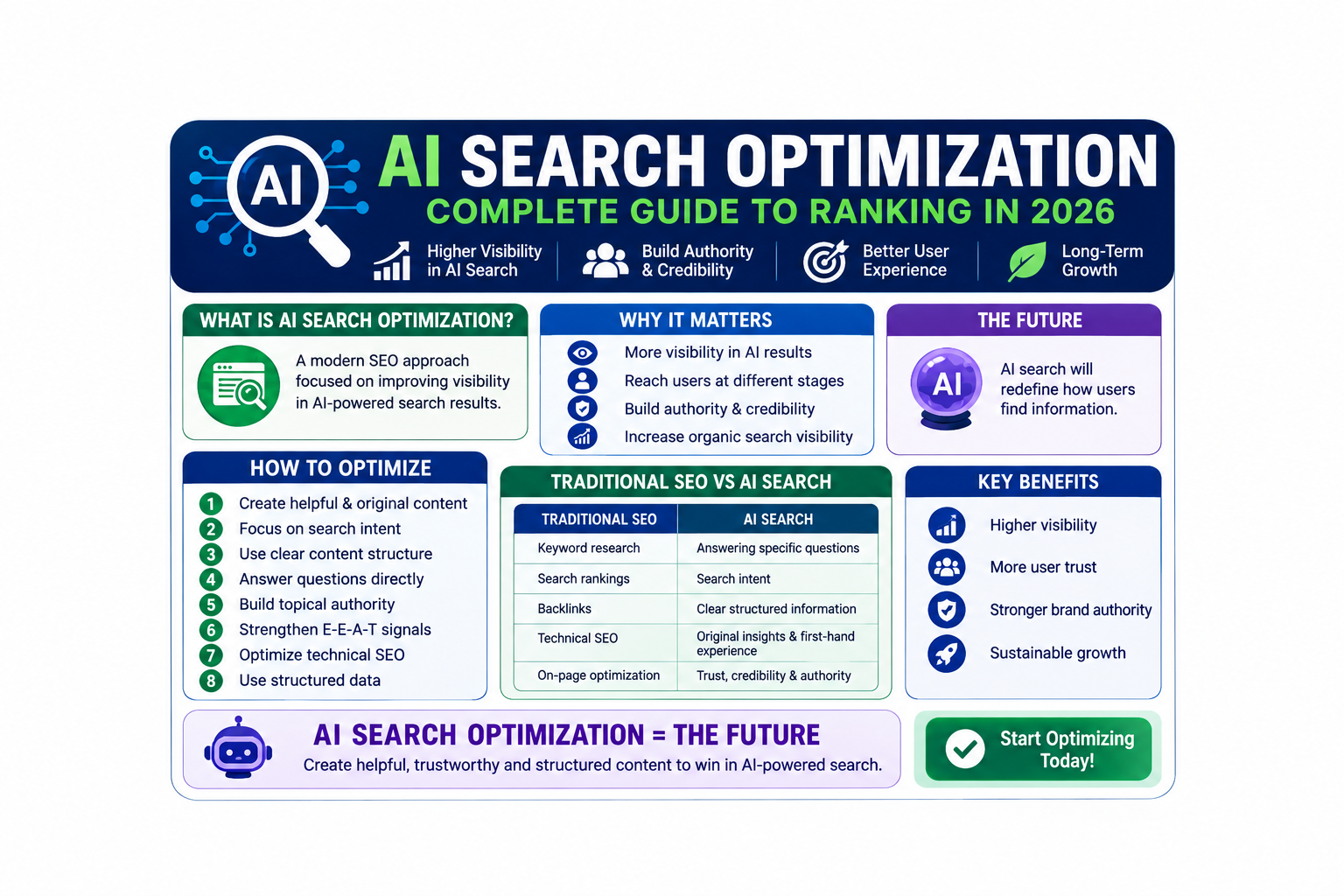
Unlike traditional SEO, which often focuses heavily on keywords and rankings, AI SEO places greater emphasis on understanding search intent, providing direct answers, demonstrating expertise, and creating content that is easy for both users and search systems to understand.
A successful AI SEO strategy can help businesses increase organic traffic, improve online visibility, attract qualified visitors, and strengthen their presence in modern search experiences.
Why AI SEO Matters in 2026
Search behavior is becoming more conversational. Instead of searching for short phrases such as “best SEO services,” users may ask detailed questions such as “What is the best SEO strategy for a small business in 2026?”
AI-powered search systems can understand these longer queries and provide summarized answers based on information from multiple sources.
This means businesses should create content that clearly answers users’ questions and covers topics comprehensively.
AI SEO is important because:
- Search is becoming more conversational.
- AI can better understand context and intent.
- Users expect quick and accurate answers.
- High-quality content can appear across different search experiences.
- Businesses need stronger topical authority and trust signals.
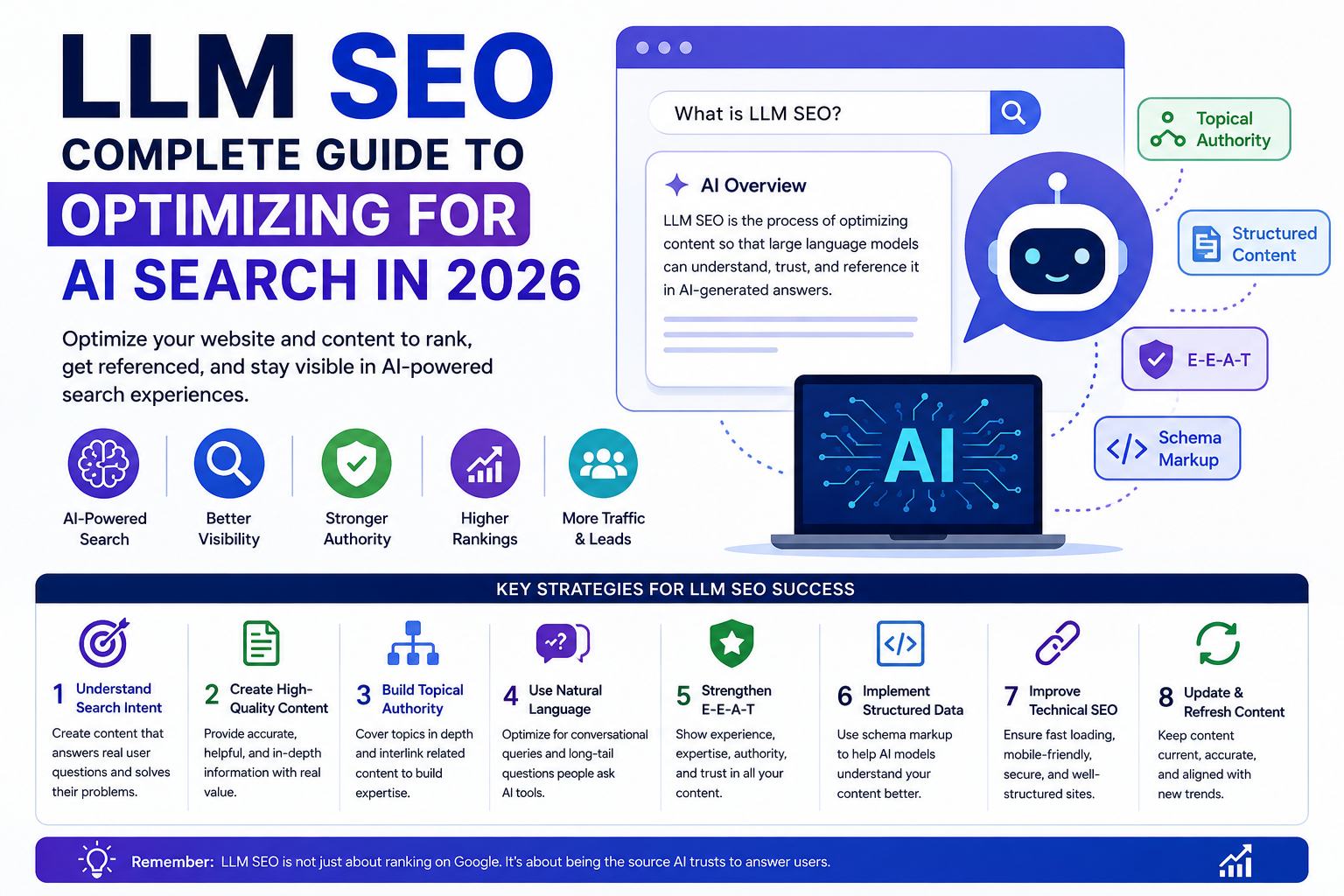
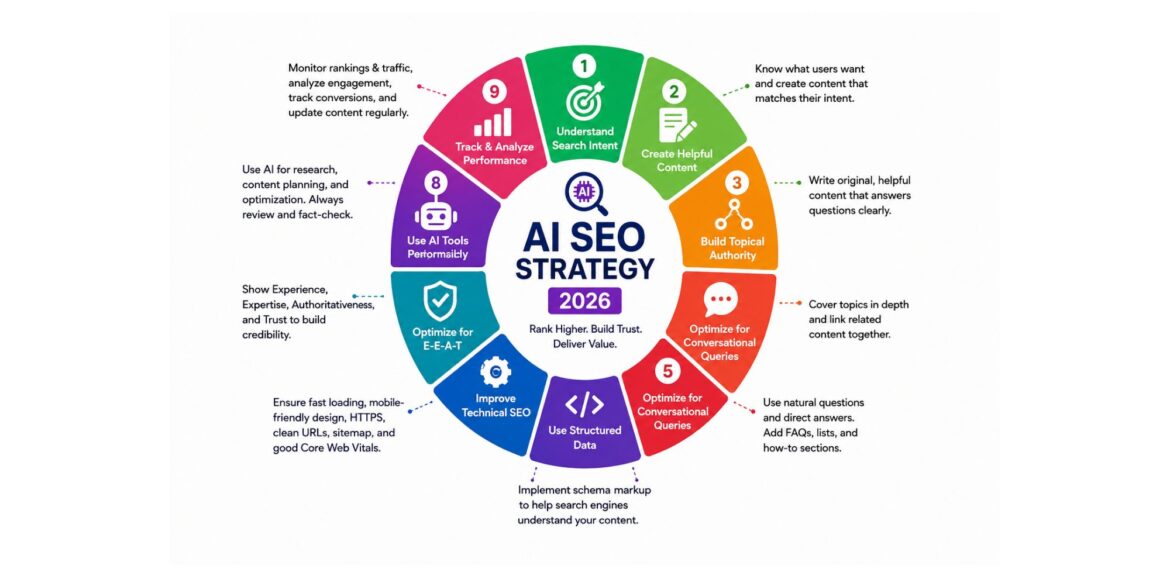
1. Understand Search Intent
Search intent is one of the most important parts of an AI SEO strategy.
Before creating content, understand what users actually want when they search for your target keyword.
Common search intents include:
- Informational: Users want to learn something.
- Navigational: Users are looking for a specific website or brand.
- Commercial: Users are researching products or services.
- Transactional: Users are ready to make a purchase.
For example, someone searching “AI SEO strategy” may want a definition, actionable techniques, examples, or a complete guide.
Create content that satisfies the actual purpose behind the search instead of simply repeating the keyword.
2. Create Helpful and Original Content
Content remains one of the most important parts of SEO. However, publishing large amounts of generic AI-generated content is not an effective long-term strategy.
Your content should provide genuine value, original insights, practical examples, and accurate information.
When creating content:
- Answer the main question early.
- Use clear and simple language.
- Include useful examples.
- Support important claims with reliable information.
- Avoid unnecessary keyword repetition.
- Keep information accurate and updated.
- Add unique insights based on real experience.
AI tools can help with brainstorming, research organization, and content planning, but human review and expertise are essential for producing trustworthy content.
3. Build Topical Authority
AI search systems need to understand what your website is about. Building topical authority can help establish your website as a reliable source within your industry.
Instead of creating one article about a broad topic, build a group of related content.
For example, if your website focuses on SEO, you could create content about:
- AI SEO
- Technical SEO
- On-page SEO
- Keyword research
- Link building
- Content optimization
- Google Search Console
- SEO analytics
- Local SEO
Connect related pages using internal links. This creates a clear content structure and helps users and search engines discover related information.
4. Optimize Content for Conversational Queries
AI-powered search is increasingly conversational. Users often ask complete questions instead of entering short keywords.
For example:
Traditional query:
“AI SEO strategy”
Conversational query:
“How can I create an AI SEO strategy for my business in 2026?”
To optimize for conversational search, include natural questions and direct answers throughout your content.
Useful formats include:
- Frequently Asked Questions
- Step-by-step guides
- How-to sections
- Comparison tables
- Definitions
- Examples
- Lists and bullet points
This makes content easier to understand and helps search systems identify relevant information.
5. Use Structured Data
Structured data helps search engines understand the meaning and context of webpage content.
Depending on your page, relevant schema types may include:
- Article Schema
- FAQ Schema
- Organization Schema
- Local Business Schema
- Product Schema
- Breadcrumb Schema
Correctly implemented structured data can improve how search engines interpret your content. However, schema should accurately represent the information visible on the page.
6. Improve Technical SEO
A strong AI SEO strategy still requires a technically healthy website.
Important technical SEO factors include:
- Fast page loading
- Mobile-friendly design
- Secure HTTPS connection
- Clean URL structure
- XML sitemap
- Proper robots.txt configuration
- Canonical tags
- Crawlable internal links
- Optimized images
- Good Core Web Vitals
Technical problems can prevent search engines from efficiently crawling, understanding, and indexing your website.
7. Optimize for E-E-A-T
Trust is becoming increasingly important in modern search.
Google’s E-E-A-T framework represents:
- Experience
- Expertise
- Authoritativeness
- Trustworthiness
Show who created your content and why they are qualified to discuss the subject.
You can strengthen trust by adding author information, company details, contact information, references, original examples, and transparent information about your business.
8. Use AI Tools Responsibly
AI tools can make SEO workflows more efficient. They can help with keyword research, content outlines, competitor analysis, title ideas, content briefs, and identifying optimization opportunities.
However, AI should support your SEO process rather than replace human expertise.
Always fact-check AI-generated information, remove inaccurate claims, add original insights, and edit content for your audience.
The objective should be better content, not simply more content.
9. Track SEO Performance
An AI SEO strategy should be measured regularly.
Important SEO metrics include:
- Organic traffic
- Keyword rankings
- Click-through rate
- Impressions
- Conversions
- Engagement
- Indexed pages
- Backlinks
- Search visibility
Use tools such as Google Search Console and Google Analytics to understand how users discover and interact with your website.
Regularly review your content and update pages that are losing traffic or becoming outdated.
Conclusion
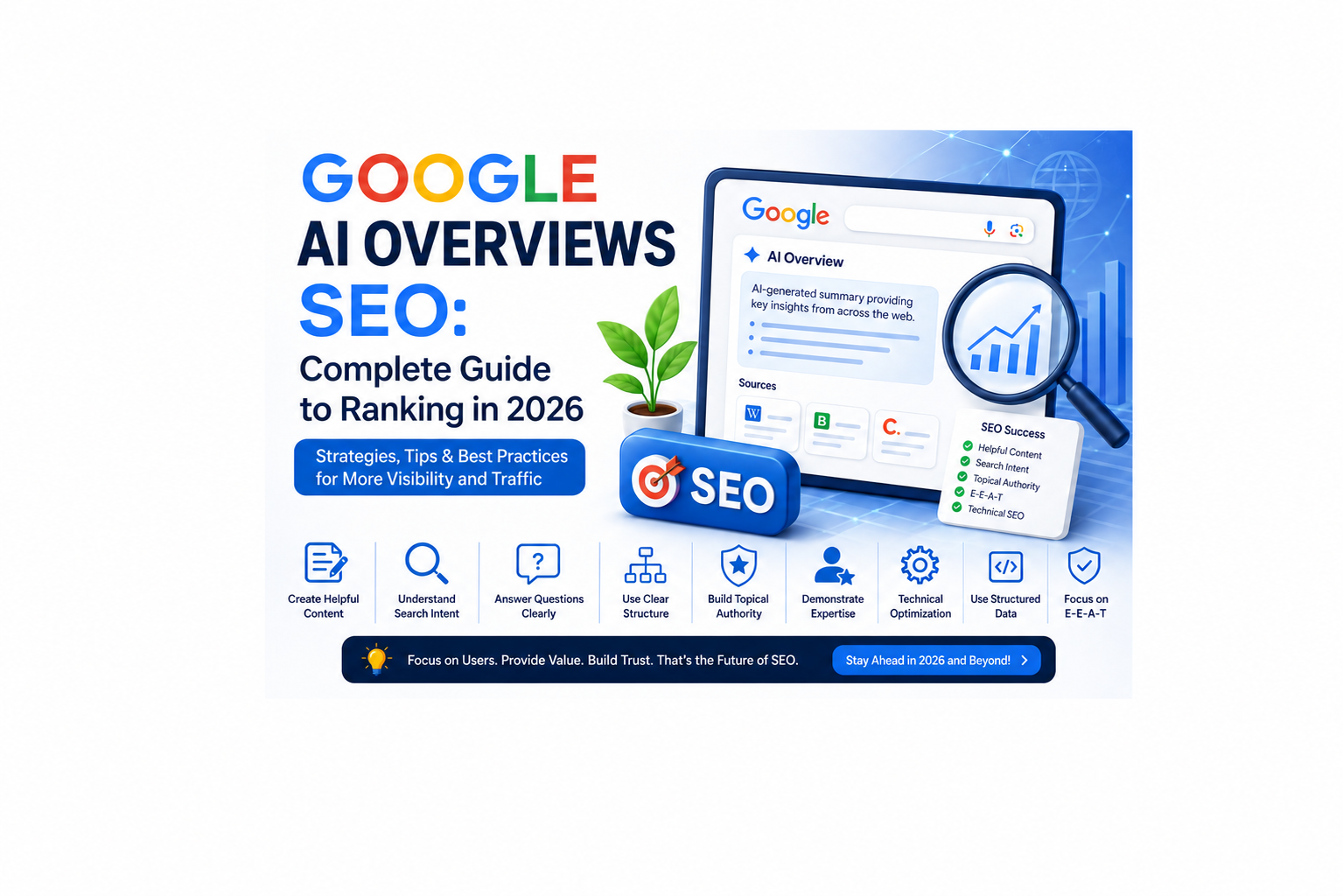
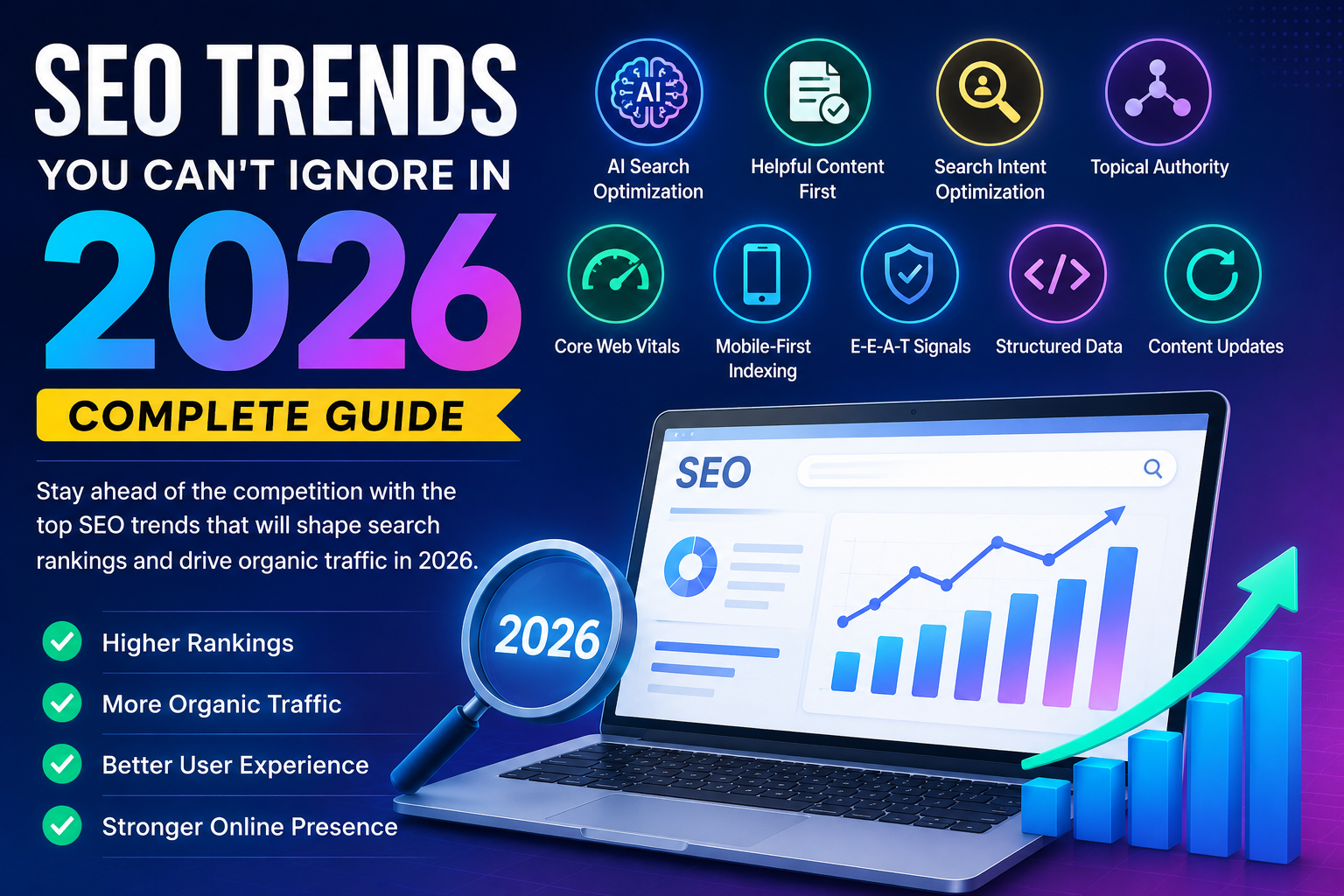
An effective AI SEO strategy in 2026 requires more than traditional keyword optimization. Businesses need to focus on search intent, helpful content, topical authority, conversational queries, technical SEO, structured data, and trust.
AI is changing how people discover information, but the fundamentals of good SEO remain important: create useful content, provide accurate information, build authority, and deliver a strong user experience.
By combining traditional SEO with AI-focused optimization, businesses can improve their visibility across modern search experiences and build a stronger organic presence for the future.