
How AI is Transforming Digital Marketing in 2026
Digital marketing in 2026 looks very different from what it was just a few years ago. Artificial Intelligence (AI) is no longer just a supporting tool—it has become the core engine that drives modern marketing strategies. From content creation to customer targeting and campaign optimization, AI is reshaping how businesses connect with their audiences.
In today’s fast-moving digital world, brands that adopt AI are gaining a strong competitive edge, while those that don’t risk falling behind. Let’s explore how AI is transforming digital marketing in 2026 and what it means for businesses and marketers.
The Rise of AI in Digital Marketing
AI adoption has grown rapidly due to the increasing demand for speed, personalization, and data-driven decisions. Marketers now rely on AI tools to automate repetitive tasks, analyze large datasets, and deliver highly targeted campaigns.
Instead of manually managing campaigns, businesses can now use AI to handle everything from planning to execution. This shift allows marketers to focus more on strategy, creativity, and customer experience.
Hyper-Personalization at Scale
One of the biggest changes AI brings to digital marketing is hyper-personalization. In 2026, customers expect brands to understand their needs and preferences instantly.
AI analyzes user behavior, browsing history, and interactions to deliver personalized experiences such as:
- Customized website content for each visitor
- Personalized email campaigns
- Product recommendations based on past activity
This level of personalization improves engagement, builds trust, and significantly increases conversion rates.
Automated Campaign Management
AI has introduced a new era of automated marketing. Marketers no longer need to manually manage every aspect of a campaign.
With AI-powered tools, you can:
- Set campaign goals and budgets
- Automatically target the right audience
- Optimize ad creatives in real time
- Run continuous A/B testing
This approach, often referred to as “agentic AI,” allows campaigns to run and improve automatically with minimal human intervention.
Predictive Analytics for Smarter Decisions
AI enables predictive marketing by analyzing past data to forecast future behavior. This helps businesses make smarter and faster decisions.
Key benefits include:
- Identifying high-intent customers
- Predicting customer churn
- Forecasting sales trends
- Optimizing customer journeys
Instead of reacting to data after a campaign ends, marketers can now take proactive actions that improve outcomes in real time.
AI-Powered Content Creation
Content creation has become faster and more efficient with AI. Tools can now generate:
- Blog posts
- Social media content
- Email campaigns
- Video scripts
- Ad copy
AI also helps with keyword research and SEO optimization, ensuring that content ranks better on search engines.
However, while AI can generate content quickly, human creativity is still essential. The best results come from combining AI efficiency with human insight and storytelling.
Real-Time Campaign Optimization
In 2026, digital marketing campaigns are no longer static. AI continuously monitors performance and makes adjustments instantly.
This includes:
- Shifting budget to high-performing ads
- Adjusting targeting based on user behavior
- Testing multiple creatives simultaneously
Real-time optimization reduces wasted ad spend and improves overall return on investment (ROI).
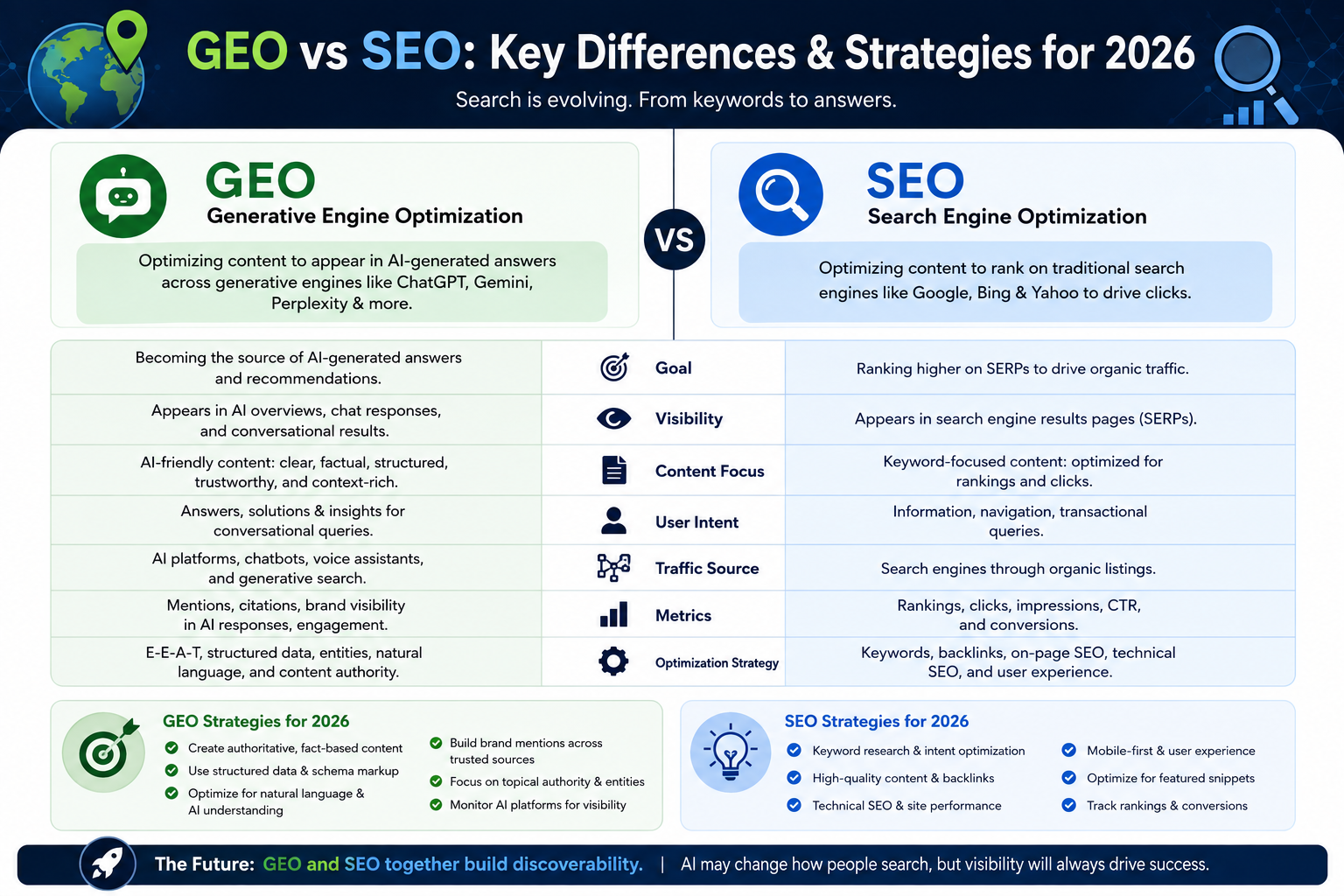
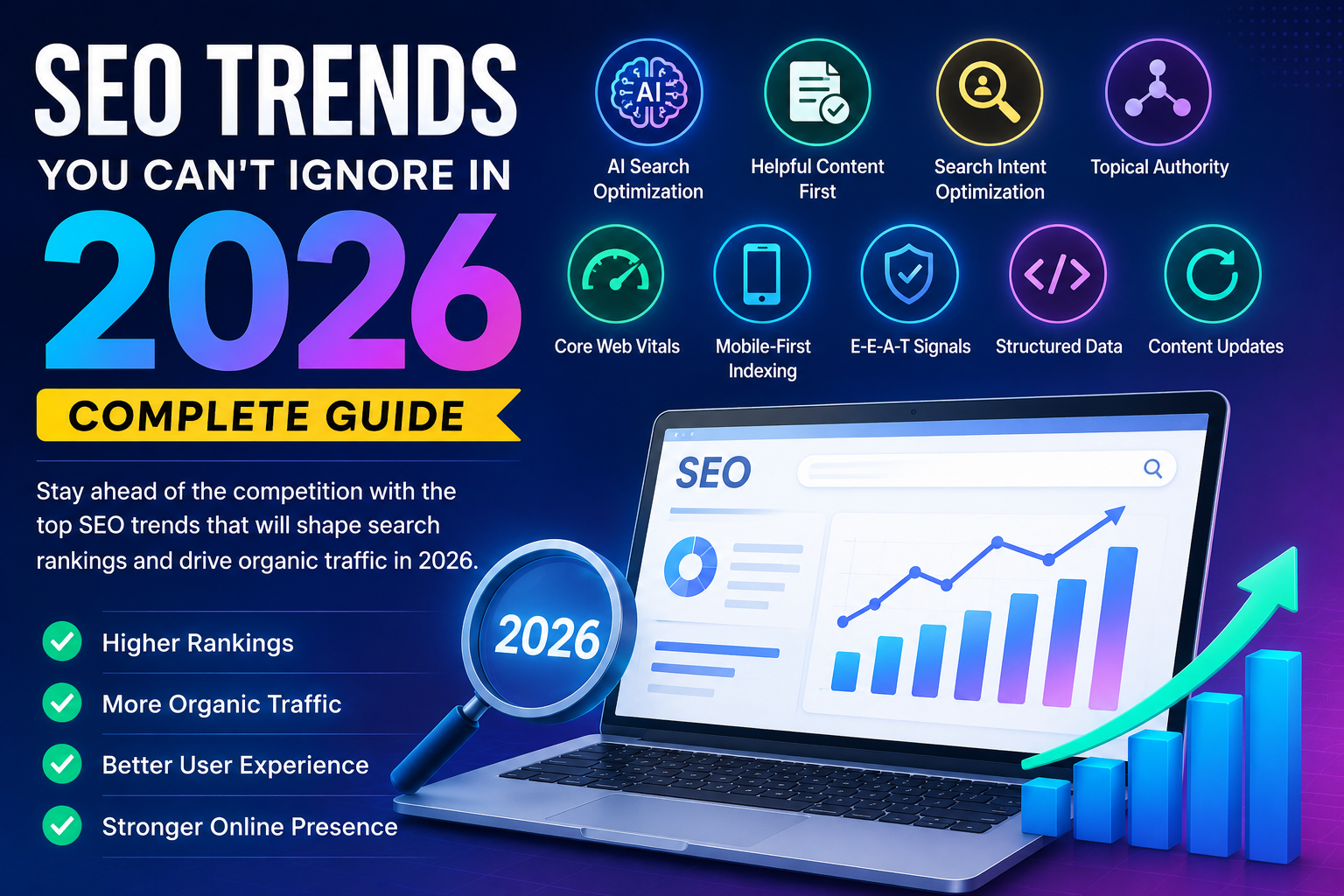
The Evolution of Search: From SEO to GEO
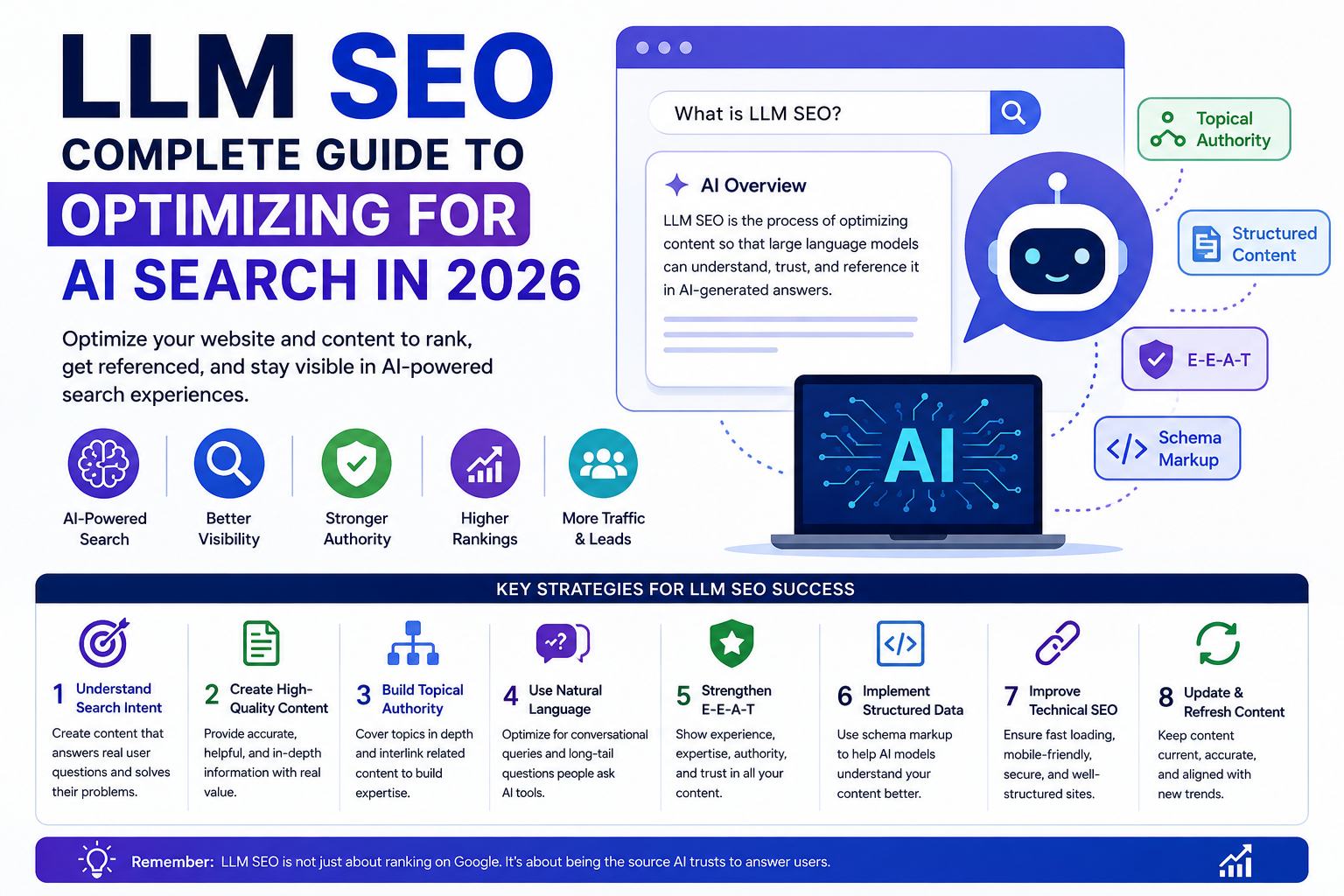
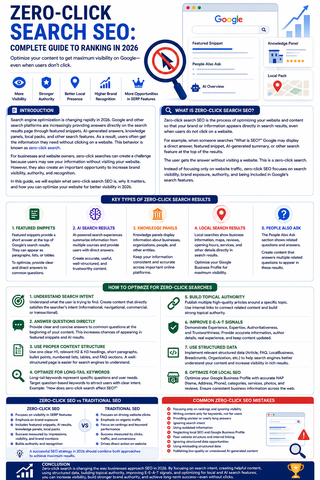
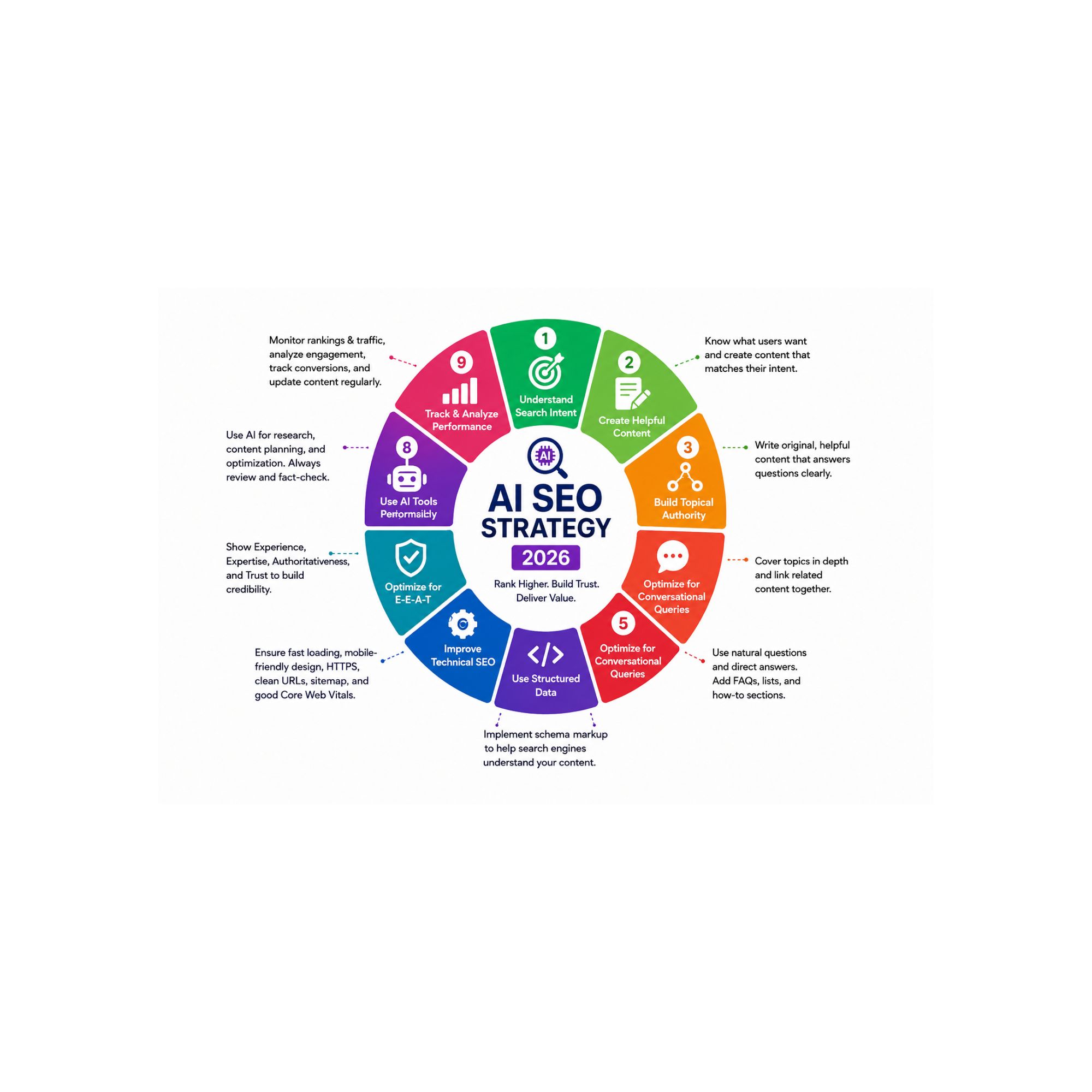
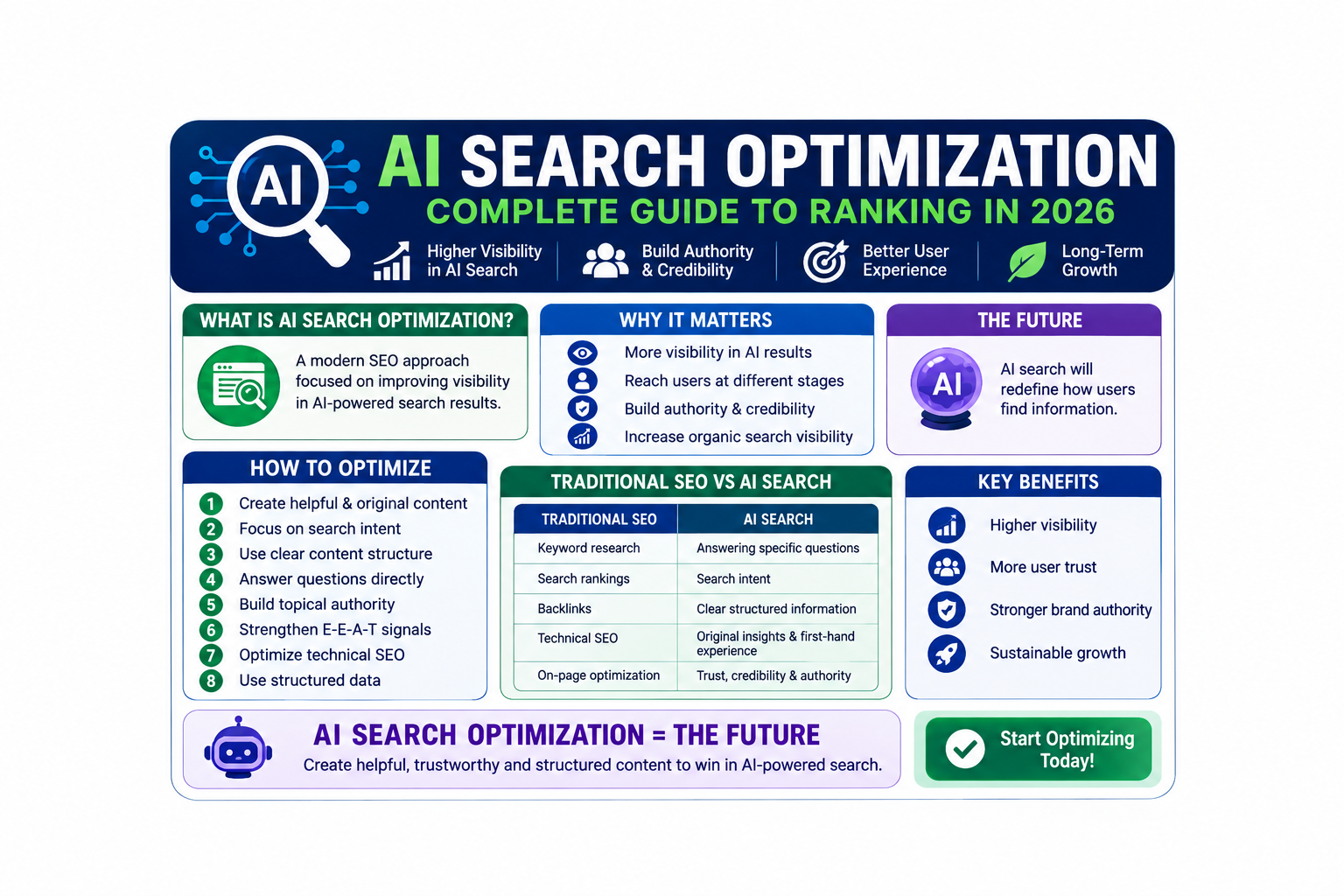
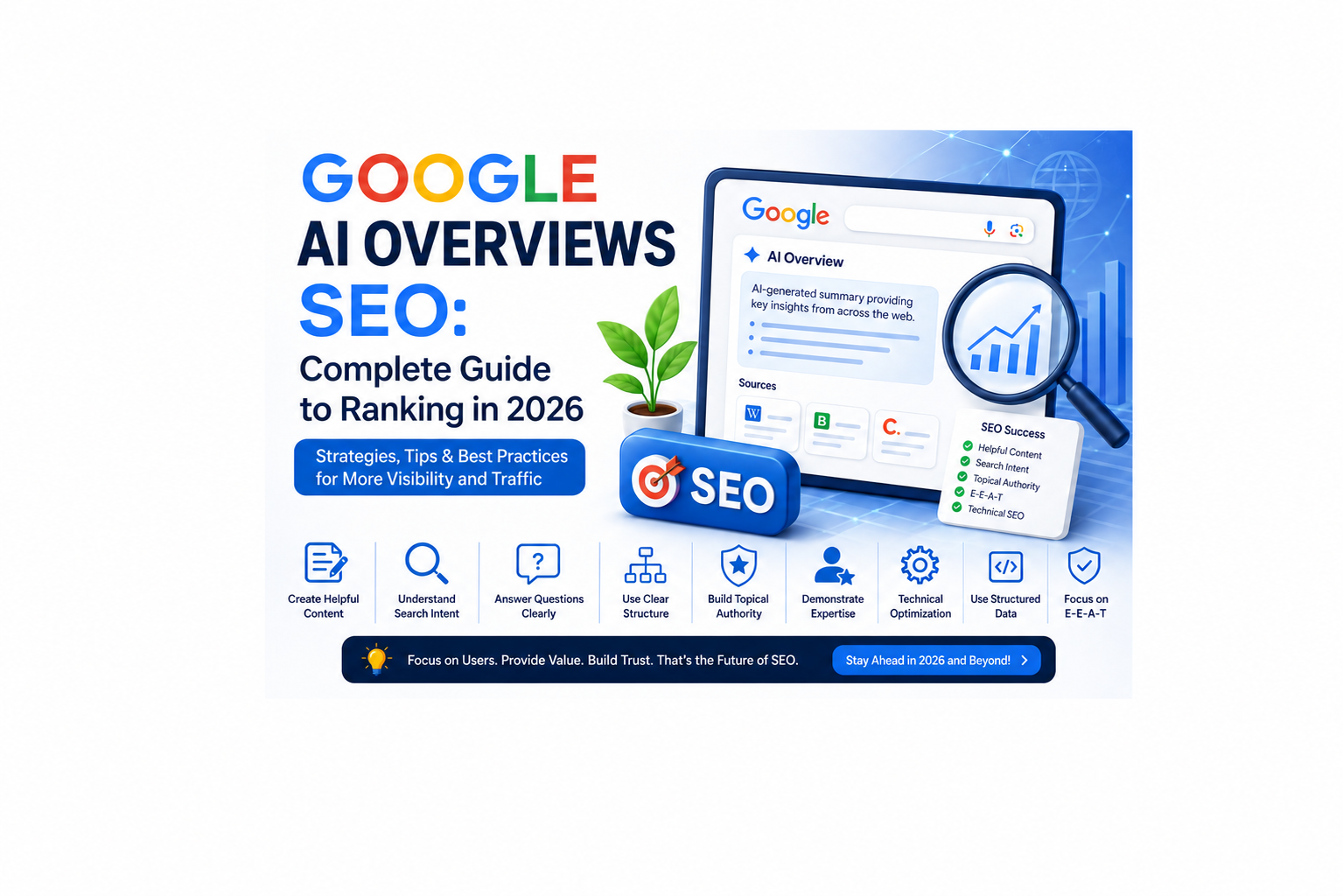
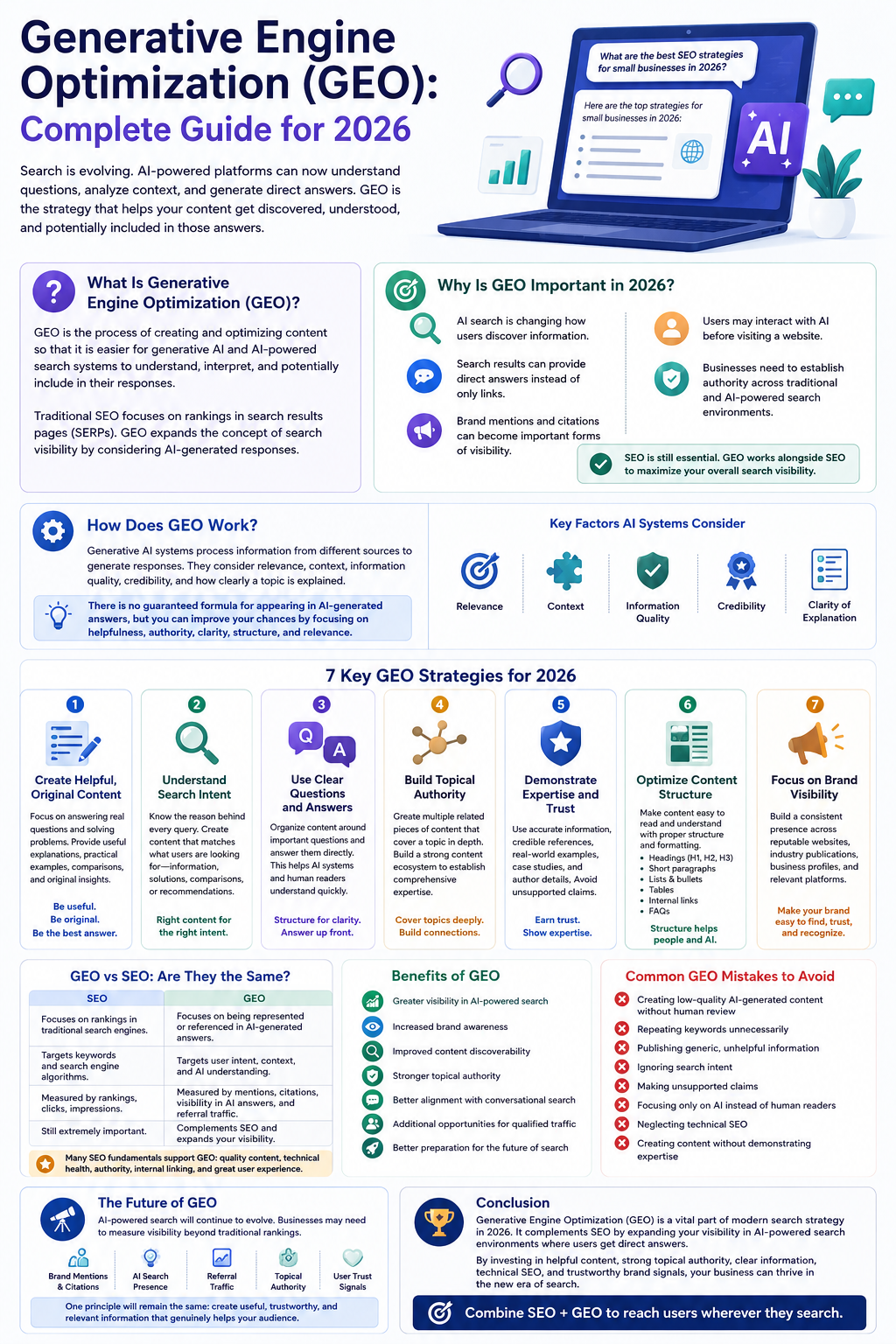
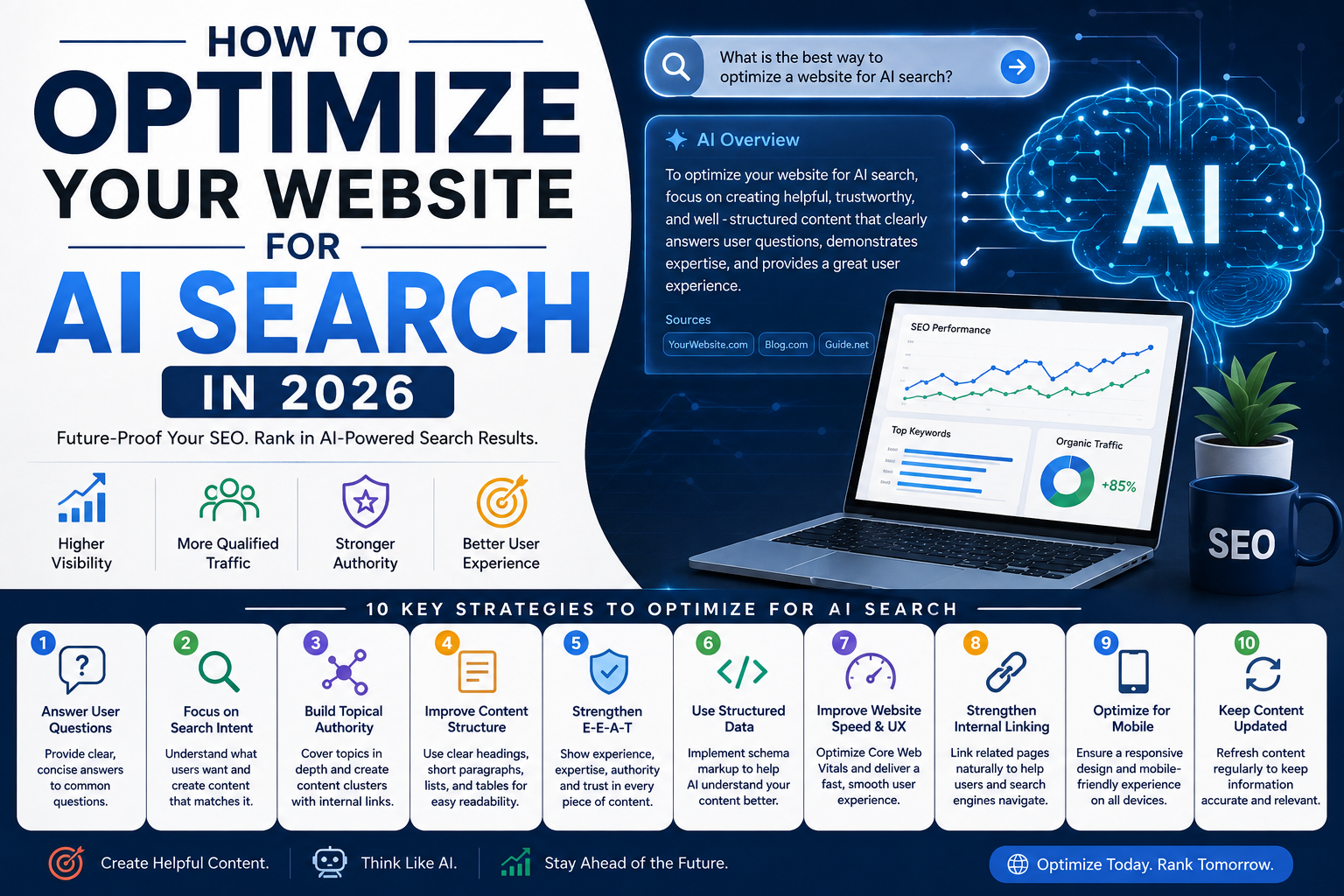
Search engine optimization (SEO) is evolving into Generative Engine Optimization (GEO). With AI-powered search engines, users now get direct answers instead of browsing multiple websites.
This shift means businesses must:
- Create high-quality, authoritative content
- Use structured data
- Focus on answering user queries clearly
Brands that provide reliable and relevant information are more likely to be featured in AI-generated search results.
Voice, Visual, and Conversational Marketing
User behavior is changing, and AI is driving new ways people search and interact online.
Voice Search
Devices like smart speakers allow users to search using voice commands, making conversational content more important.
Visual Search
Users can search using images instead of text, changing how products and services are discovered.
Chatbots and AI Assistants
AI-powered chatbots provide instant customer support, answer queries, and guide users through the buying process.
These technologies make marketing more interactive and user-friendly.
AI Influencers and Synthetic Media
A growing trend in 2026 is the use of AI-generated influencers and digital avatars. Brands are creating virtual personalities to promote products and engage audiences.
Benefits include:
- Full control over brand messaging
- No scheduling or availability issues
- Scalable content creation
However, this trend also raises ethical questions about transparency and authenticity.
Changing Role of Marketers
AI is not replacing marketers—it is transforming their roles.
Instead of focusing on manual tasks, marketers now:
- Develop strategies
- Interpret AI-driven insights
- Focus on creativity and storytelling
- Improve customer experience
The demand for skills in data analysis, AI tools, and strategic thinking is higher than ever.
Always-On Marketing Systems
Traditional marketing campaigns used to run for a fixed duration. In 2026, marketing has become an “always-on” system.
AI continuously:
- Monitors user behavior
- Updates campaigns
- Optimizes performance
This creates a dynamic marketing environment where campaigns are constantly evolving to deliver better results.
Benefits of AI in Digital Marketing
Businesses adopting AI in digital marketing are experiencing significant advantages:
- Increased efficiency and productivity
- Better customer targeting
- Higher engagement rates
- Improved ROI
- Faster decision-making
AI allows businesses to scale their marketing efforts without increasing costs proportionally.
Challenges and Considerations
Despite its benefits, AI also brings challenges:
- Data privacy concerns
- Over-reliance on automation
- Need for skilled professionals
- Ethical concerns around AI-generated content
Businesses must use AI responsibly and maintain a balance between automation and human involvement.
The Future of AI in Digital Marketing
AI will continue to evolve and become even more integrated into marketing strategies. Future developments may include:
- More advanced personalization
- Improved voice and visual search capabilities
- Smarter AI-driven customer journeys
- Greater integration across platforms
Businesses that stay updated with these trends will be better positioned for long-term success.
Conclusion
AI is transforming digital marketing in 2026 by making it smarter, faster, and more personalized. From automated campaigns to predictive analytics and real-time optimization, AI is redefining how brands connect with their audiences.
However, success in this new era depends on how well businesses combine AI technology with human creativity and strategy. The future of digital marketing is not about choosing between AI and humans—it’s about using both together to create meaningful and impactful experiences.