
Introduction
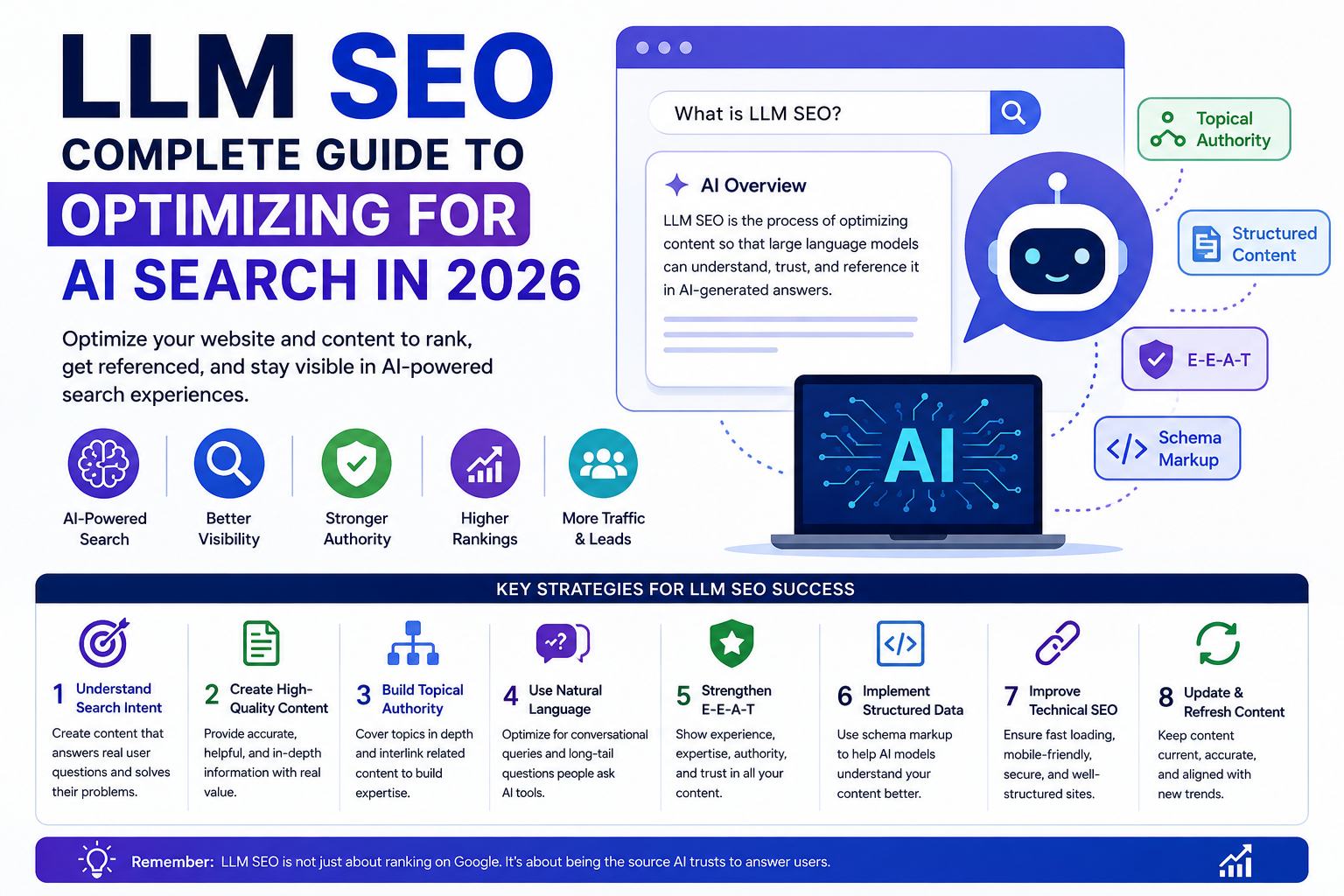
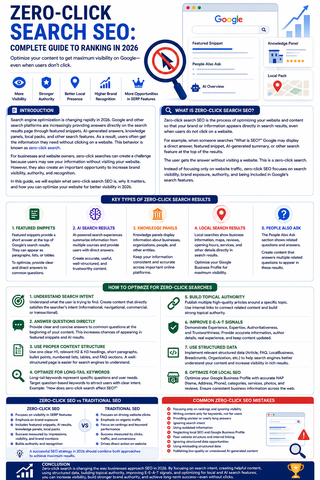
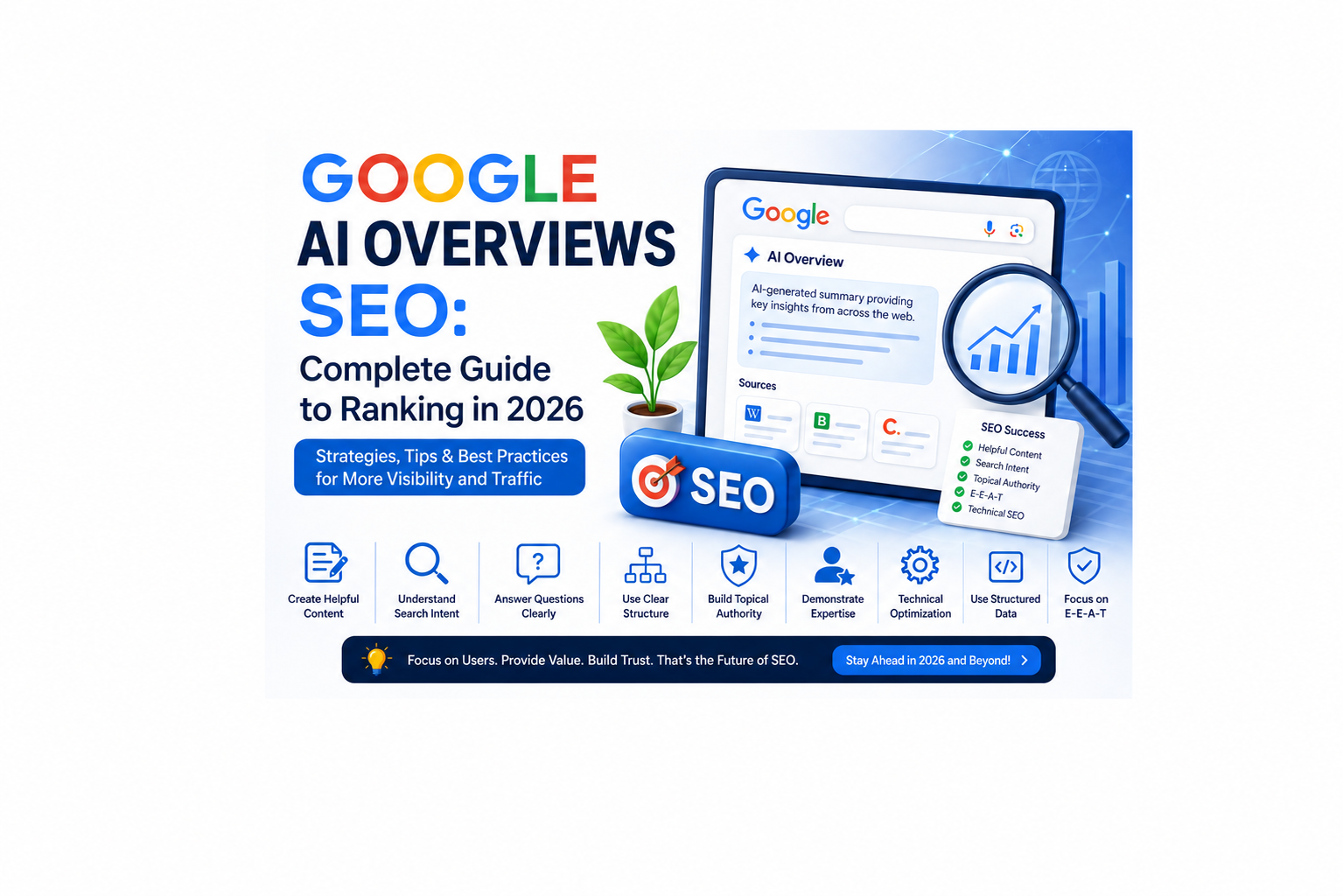
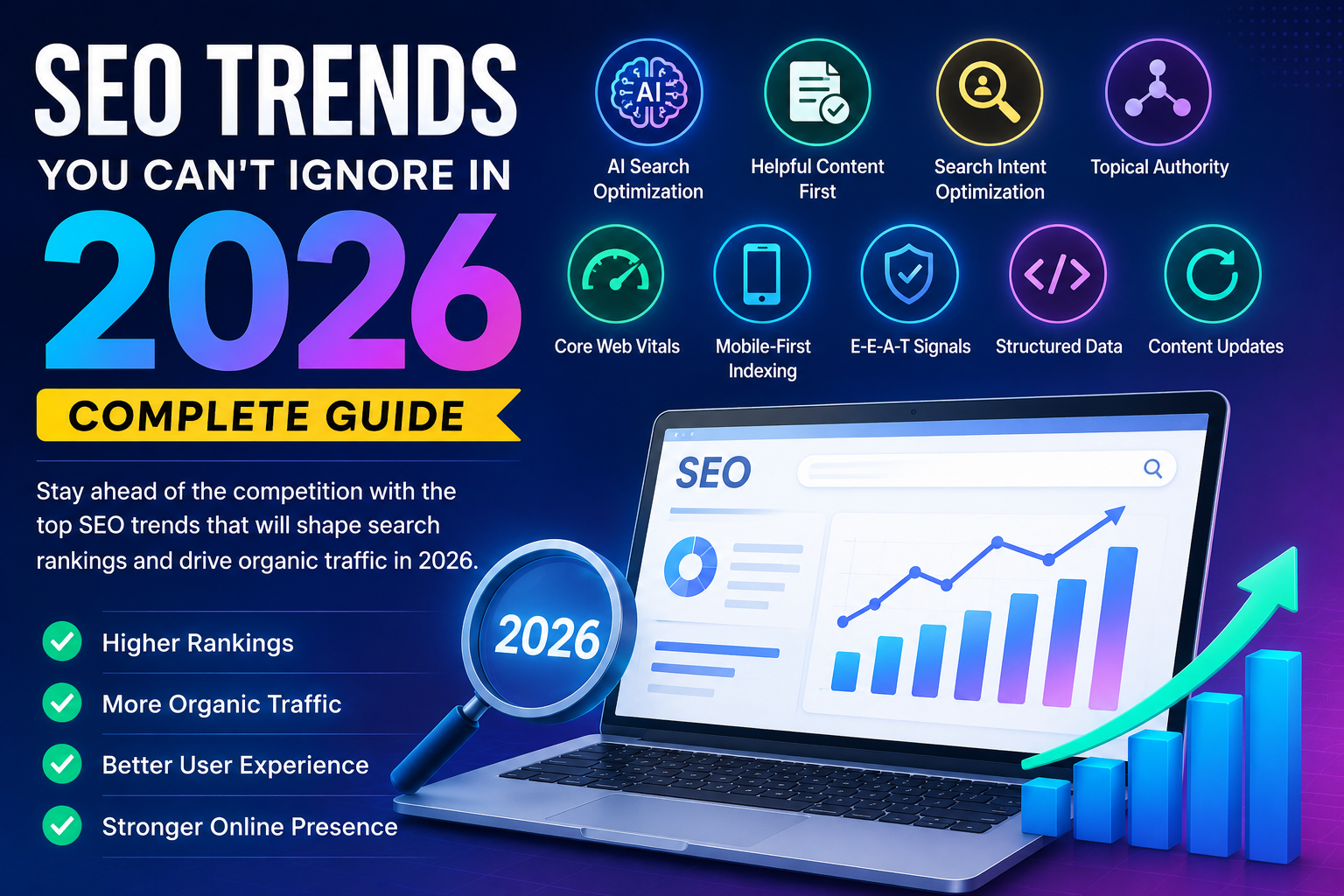
Search is changing rapidly in 2026. People are no longer relying only on traditional search engines to find information. AI-powered search experiences such as Google AI Overviews and other generative search platforms can understand questions, summarize information, and provide direct answers.
This change has created a new opportunity for businesses and website owners: AI Search Optimization.
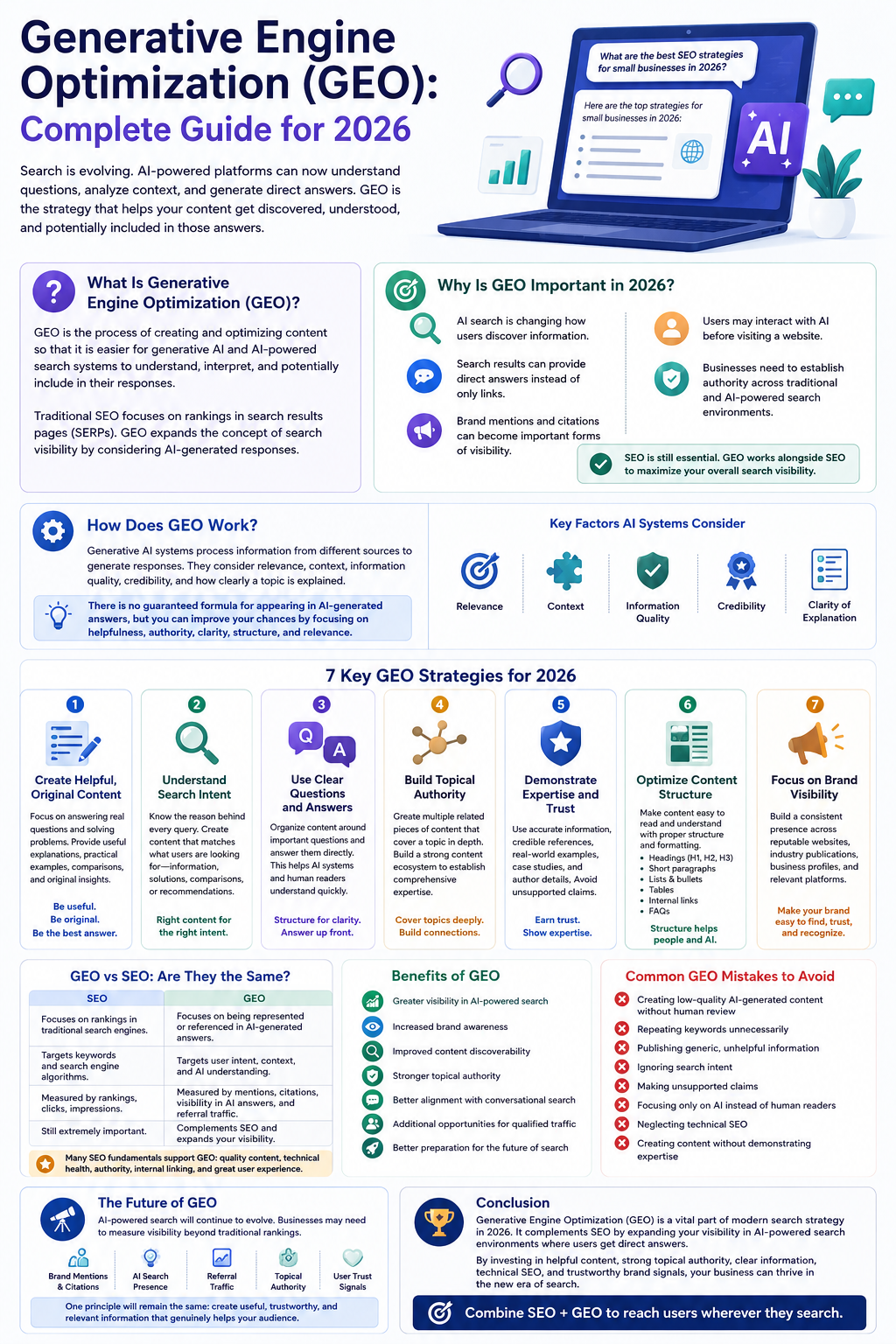
AI Search Optimization is the process of optimizing your website and content so that AI-powered search systems can easily understand, trust, and potentially reference your information. While traditional SEO is still important, businesses now need to focus on helpful content, clear information, authority, user experience, and search intent.
In this guide, we will explain what AI Search Optimization is, why it matters, and how you can optimize your website for AI search in 2026.
What Is AI Search Optimization?
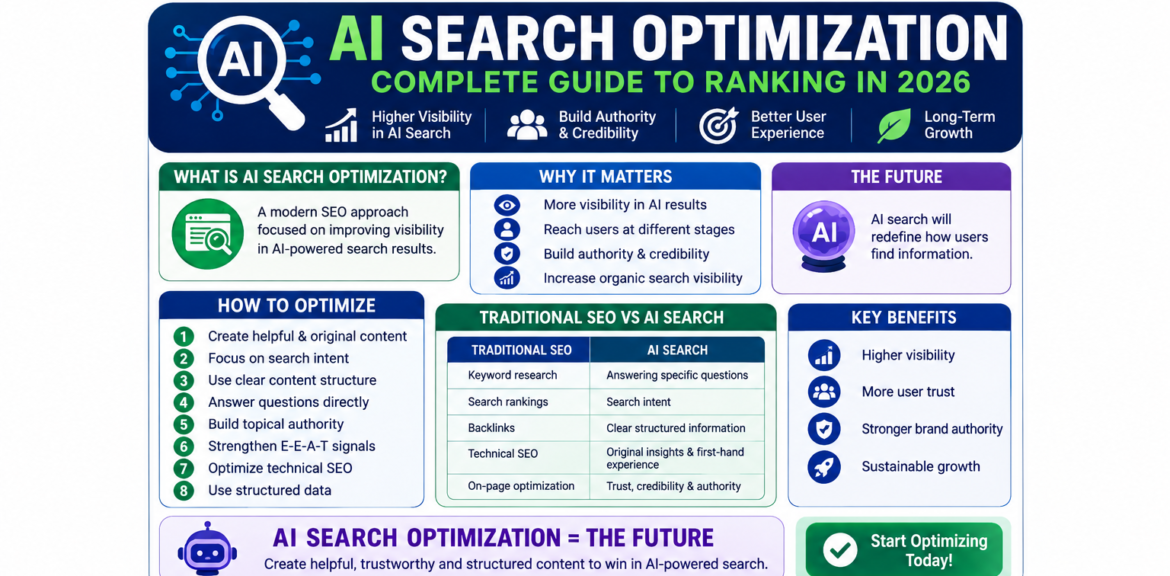
AI Search Optimization is a modern SEO approach focused on improving a website’s visibility in AI-powered search results.
Traditional SEO generally focuses on ranking webpages in search engine result pages. AI search, however, can analyze information from multiple sources and generate a direct response to a user’s query.
For example, instead of searching:
“Best SEO agency in the USA”
and manually visiting several websites, a user may ask an AI-powered search engine to recommend the best SEO agencies based on specific requirements.
To improve visibility in these experiences, your content should be easy for both users and AI systems to understand.
Why AI Search Optimization Matters in 2026
AI is becoming an important part of how people search for information, products, and services. This means businesses cannot depend entirely on traditional keyword rankings.
AI Search Optimization can help businesses:
- Improve visibility in AI-powered search results
- Reach users at different stages of the buying journey
- Build online authority and credibility
- Increase organic search visibility
- Create better, more useful content
- Strengthen their overall SEO strategy
The goal is not simply to “rank in AI.” The goal is to create content that provides such clear and useful information that search systems can confidently understand and use it.
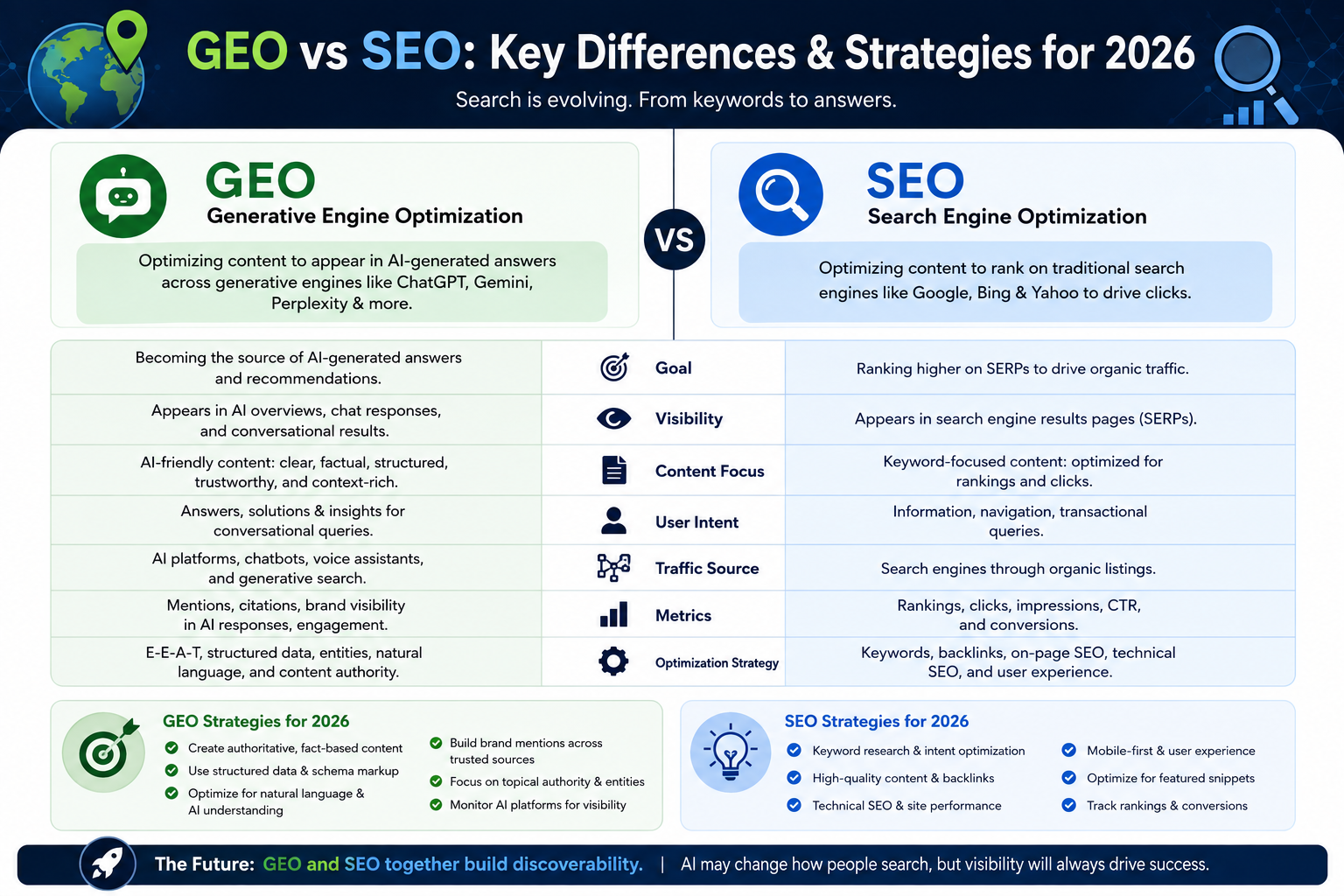
AI Search Optimization vs Traditional SEO
Traditional SEO and AI Search Optimization are closely connected, but their focus can be slightly different.
Traditional SEO often emphasizes:
- Keyword research
- Search rankings
- Backlinks
- Technical SEO
- Meta titles and descriptions
- On-page optimization
AI Search Optimization still benefits from these fundamentals but places additional emphasis on:
- Answering specific questions
- Search intent
- Clear and structured information
- Original insights
- First-hand experience
- Topical authority
- Trust and credibility
- Natural, conversational content
Therefore, AI Search Optimization should be viewed as an extension of good SEO rather than a complete replacement for traditional SEO.
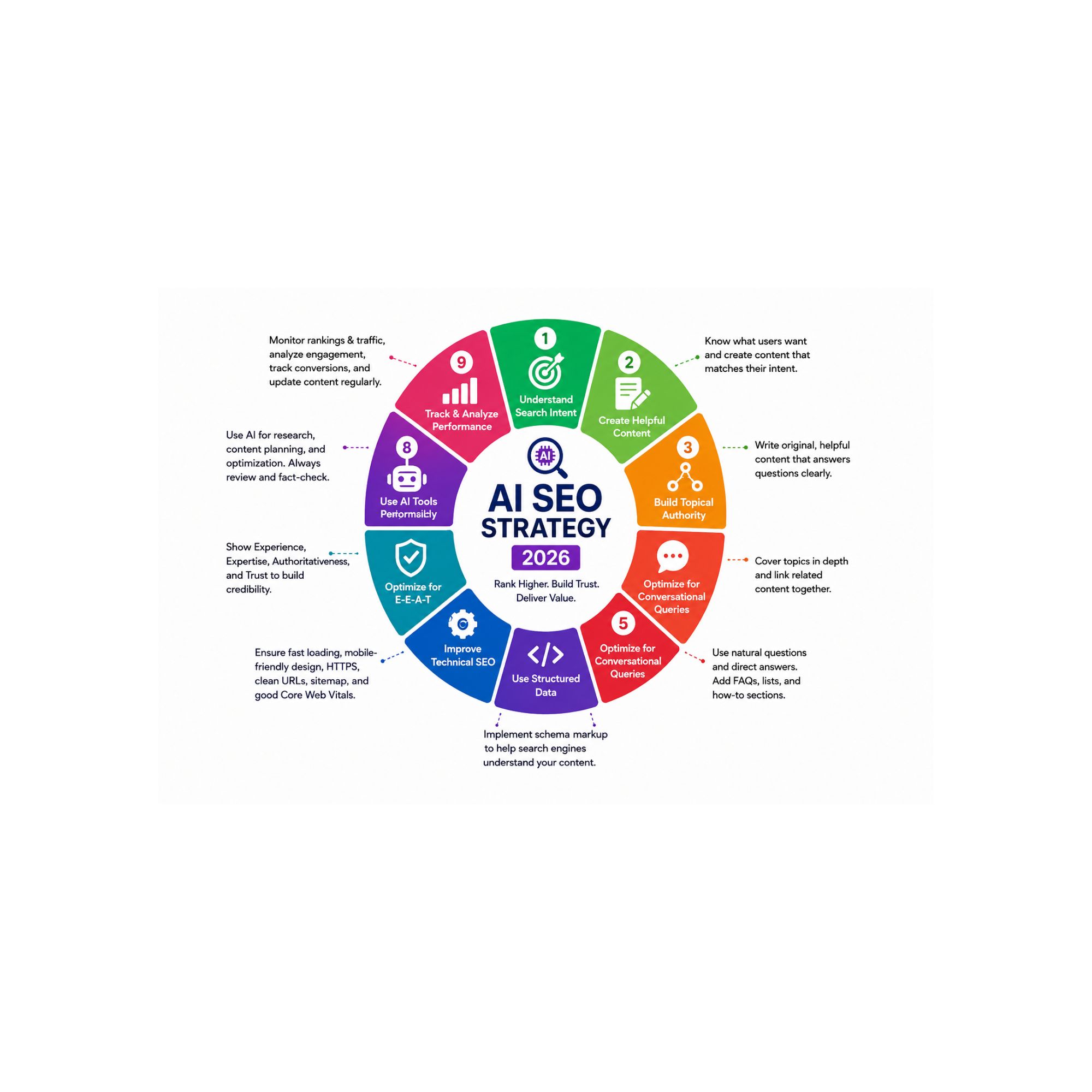
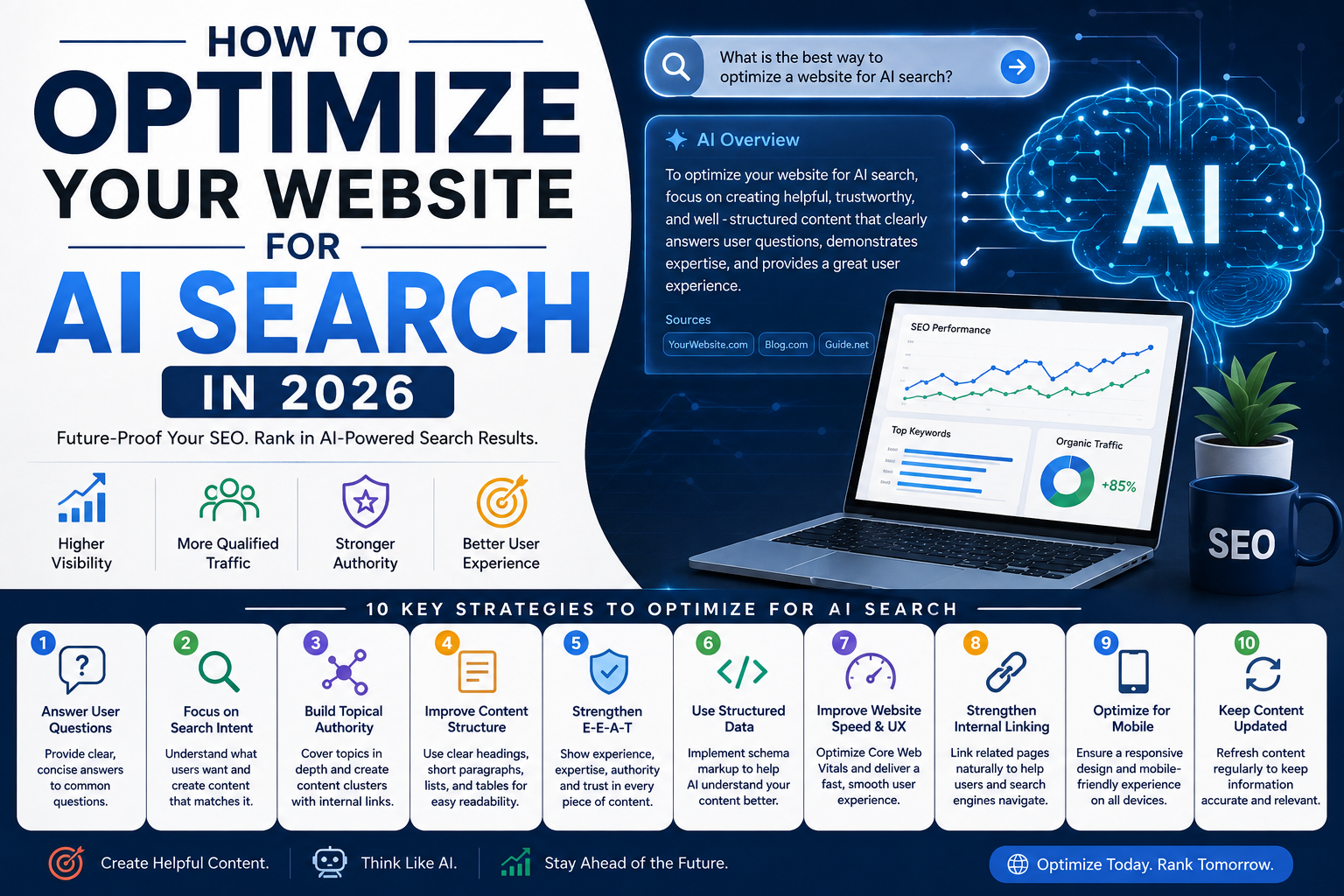
How to Optimize Your Website for AI Search
1. Create Helpful and Original Content
The foundation of AI Search Optimization is high-quality content.
Avoid creating articles simply to target keywords. Instead, understand what users actually want to know and provide a complete answer.
Your content should be:
- Original
- Accurate
- Useful
- Easy to read
- Relevant to the topic
- Updated when necessary
Add examples, practical advice, statistics, expert opinions, and unique insights where appropriate.
2. Focus on Search Intent
Search intent describes the reason behind a user’s search.
For example, someone searching “what is technical SEO” probably wants an explanation, while someone searching “technical SEO services” may be looking for a service provider.
Understanding intent allows you to create content that directly addresses the user’s needs.
Before writing content, ask:
“What question is the user really trying to answer?”
Then build your content around that question.
3. Use Clear Content Structure
AI systems need to understand the relationship between different pieces of information on a webpage.
Use a logical structure with:
- One clear H1
- Relevant H2 and H3 headings
- Short paragraphs
- Bullet points
- Numbered lists
- Tables when useful
- FAQs
- Clear definitions
For example, instead of writing one large section about SEO, divide it into sections such as What Is SEO?, Why SEO Matters, SEO Types, and How SEO Works.
This improves readability for both users and search systems.
4. Answer Questions Directly
Question-based content can be particularly useful for AI search.
Include questions that your target audience commonly asks and provide concise answers.
For example:
What is AI Search Optimization?
AI Search Optimization is the process of improving website content and authority so AI-powered search systems can better understand and potentially surface the information.
After the short answer, provide additional explanation and examples.
5. Build Topical Authority
Creating one article about a topic may not be enough to establish expertise.
Instead, create a group of related content around your main subject.
For example, if your website focuses on AI Search Optimization, you could publish content about:
- AI SEO
- Google AI Overviews
- Generative Engine Optimization
- AI search ranking factors
- Entity SEO
- Semantic SEO
- Structured data
- Search intent
- Content optimization for AI
This creates topical depth and helps demonstrate expertise in your subject area.
6. Strengthen E-E-A-T Signals
Experience, Expertise, Authoritativeness, and Trustworthiness are important principles for creating high-quality content.
To strengthen these signals, consider:
- Adding author information
- Demonstrating relevant experience
- Using reliable sources
- Providing accurate information
- Keeping content updated
- Publishing original research or insights
- Maintaining clear contact and business information
Trust is especially important when creating content that influences important decisions.
7. Optimize Technical SEO
Technical SEO remains important for AI Search Optimization.
Make sure your website:
- Loads quickly
- Works well on mobile devices
- Uses HTTPS
- Has a clean URL structure
- Has an XML sitemap
- Uses appropriate internal links
- Avoids unnecessary technical errors
- Can be crawled and indexed properly
A technically strong website gives search engines a better foundation for discovering and understanding your content.
8. Use Structured Data Where Appropriate
Structured data helps search engines understand specific information on a webpage.
Depending on your content, relevant structured data may include types such as:
- Article
- Organization
- LocalBusiness
- Product
- Breadcrumb
- FAQ
Structured data does not guarantee AI visibility, but it can help search engines interpret webpage information more effectively when implemented correctly.
The Future of AI Search Optimization
AI search is still evolving, and search platforms may continue changing how information is discovered and presented.
Businesses should therefore avoid relying on shortcuts or trying to manipulate AI systems.
A sustainable strategy is to focus on the fundamentals:
Create useful content + demonstrate expertise + satisfy search intent + maintain technical quality + build authority.
The websites that consistently provide valuable and trustworthy information are better positioned to compete as search becomes more AI-driven.
Conclusion
AI Search Optimization is becoming an important part of modern SEO in 2026. As AI-powered search experiences become more common, businesses need to think beyond traditional keyword rankings.
The best approach is to create original, helpful, well-structured content that directly answers users’ questions. Combine this with strong technical SEO, topical authority, clear website structure, and trustworthy information.
AI search may continue to evolve, but one principle remains consistent: websites that provide genuinely useful information have the strongest foundation for long-term search visibility.