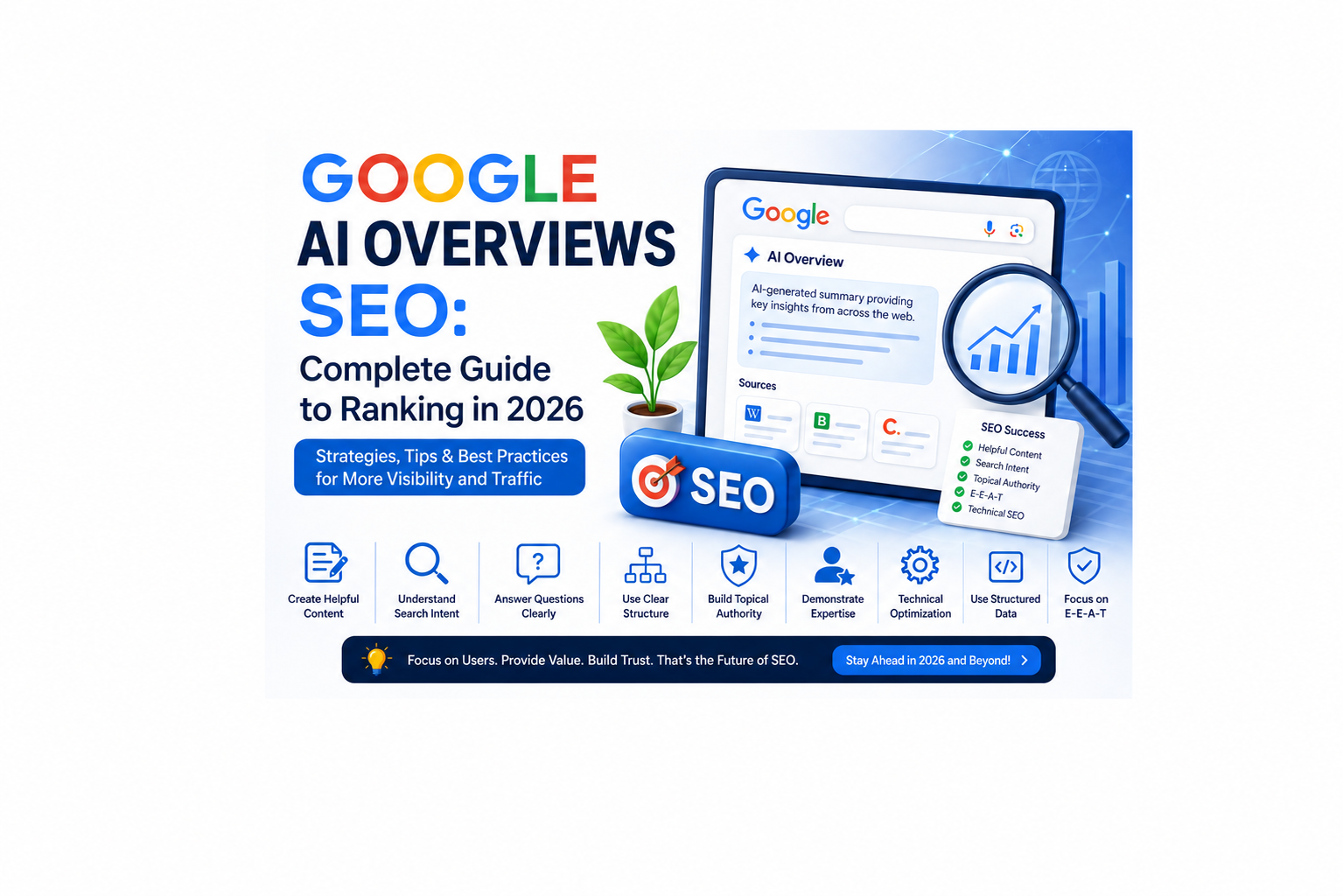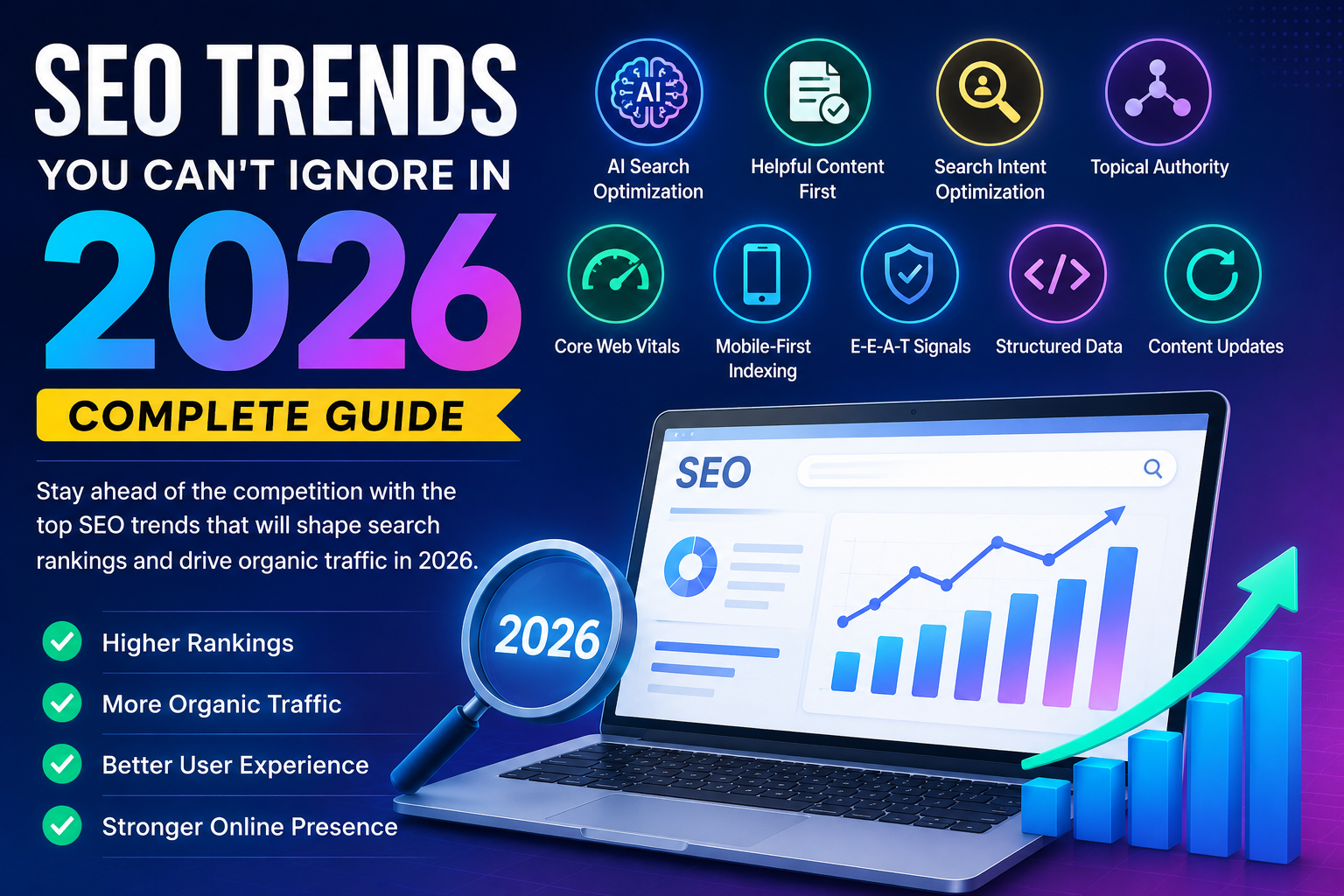

Search is changing rapidly, and artificial intelligence is playing a major role in how people discover information online. Instead of simply typing keywords into a search engine and browsing multiple websites, users can now ask AI-powered platforms detailed questions and receive direct, conversational answers.
This evolution has introduced a new digital marketing concept called Generative Engine Optimization (GEO). GEO focuses on improving a brand’s visibility in AI-generated answers and helping AI-powered search systems understand, trust, and potentially reference a website’s content.
In 2026, businesses that want to stay competitive need to understand how GEO works and how it fits alongside traditional SEO.
What Is Generative Engine Optimization (GEO)?
Generative Engine Optimization (GEO) is the process of creating and optimizing content so that it is easier for generative AI and AI-powered search systems to understand, interpret, and potentially include in their responses.
Traditional SEO primarily focuses on improving a website’s rankings in search engine results pages (SERPs). GEO expands the concept of search visibility by considering AI-generated responses.
For example, a user may ask an AI search platform:
“What are the best SEO strategies for small businesses in 2026?”
Instead of receiving only a list of webpages, the user may receive a summarized answer with information gathered from multiple sources.
GEO aims to make your content useful, clear, authoritative, and relevant enough to become a potential source for these answers.
Why Is GEO Important in 2026?
The way people search for information is becoming more conversational. Users increasingly ask complete questions instead of entering short keywords.
AI-powered search can understand context, follow-up questions, and user intent. This means businesses need to think beyond traditional keyword rankings.
GEO is important because:
- AI search is changing how users discover information.
- Search results can provide direct answers instead of only links.
- Brand mentions and citations can become important forms of visibility.
- Users may interact with AI before visiting a website.
- Businesses need to establish authority across traditional and AI-powered search environments.
This does not mean traditional SEO is no longer useful. Instead, GEO should be considered an additional strategy that works alongside SEO.
How Does GEO Work?
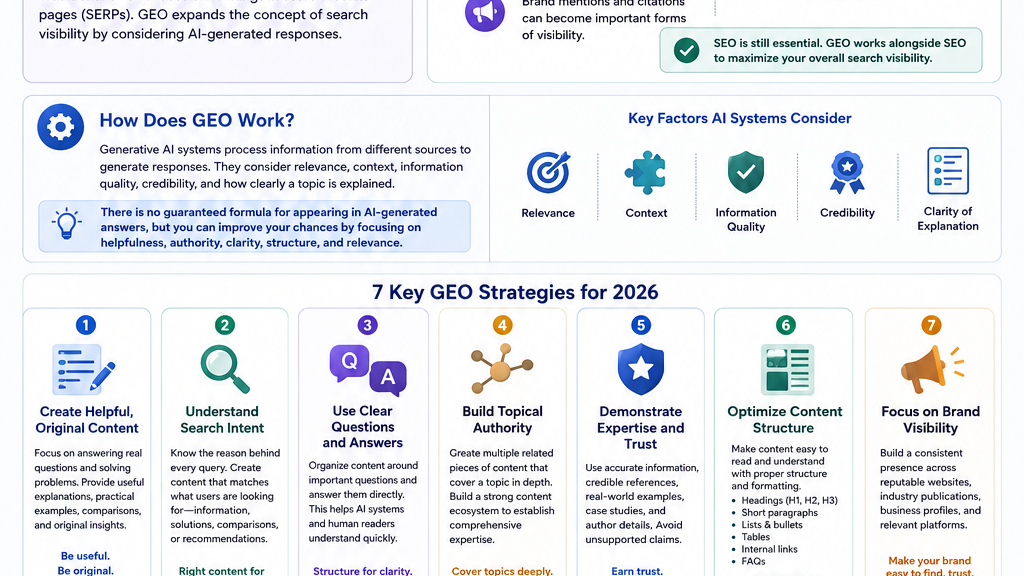
Generative AI systems process information from different sources to generate responses. They consider factors such as relevance, context, information quality, credibility, and how clearly a topic is explained.
While there is no guaranteed formula for appearing in AI-generated answers, businesses can improve their content by following strong content and SEO practices.
A successful GEO strategy generally focuses on helpfulness, authority, clarity, structure, and relevance.
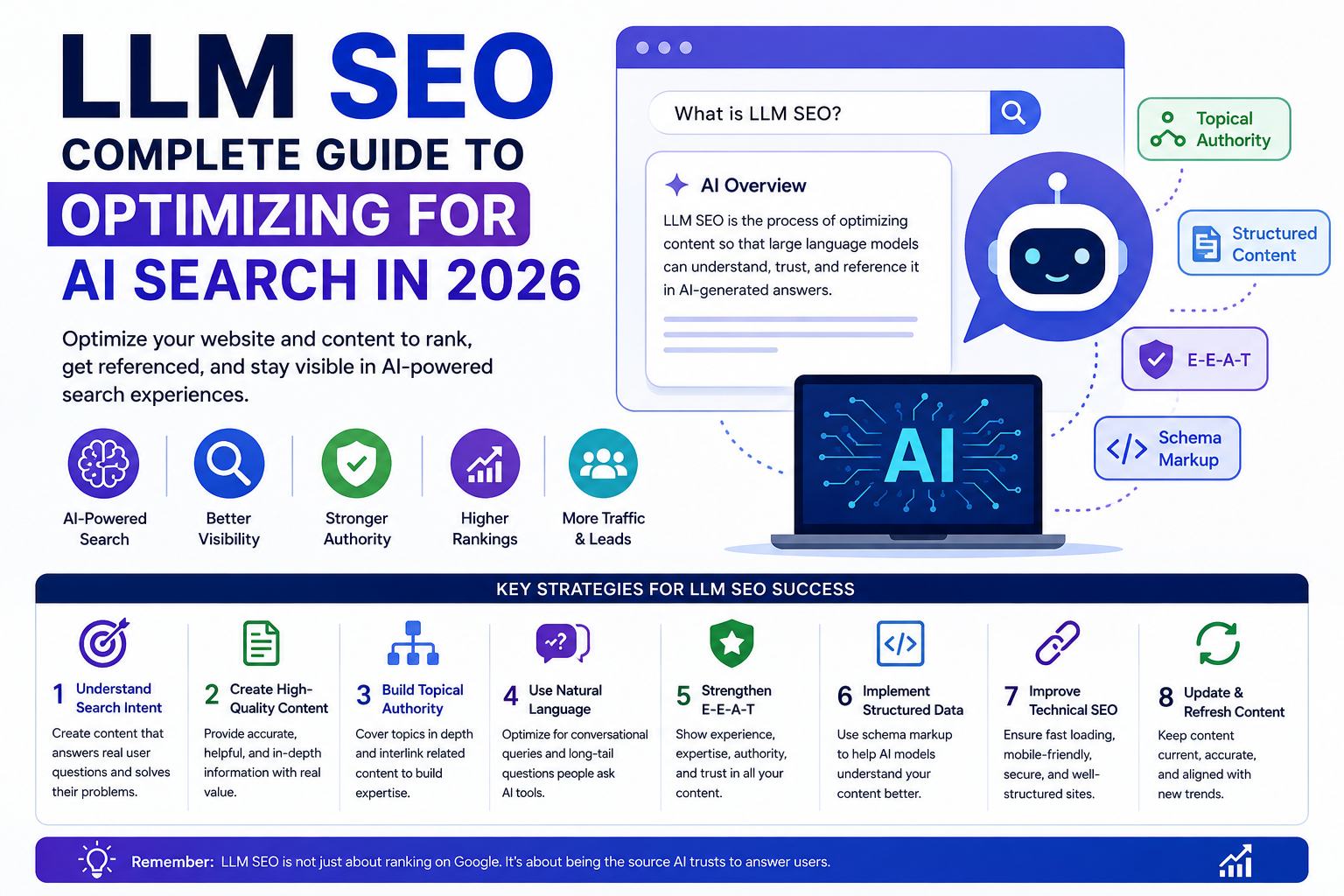
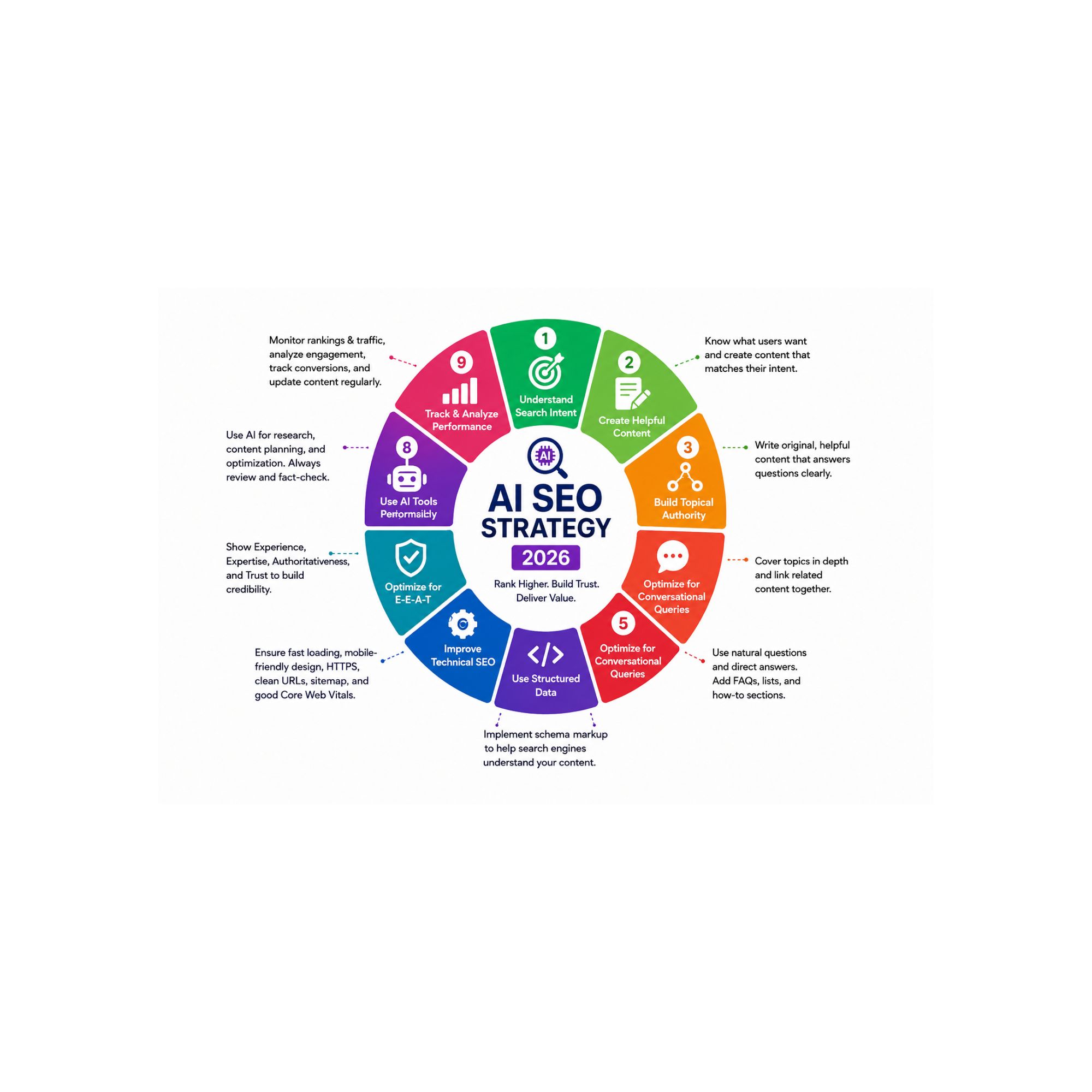
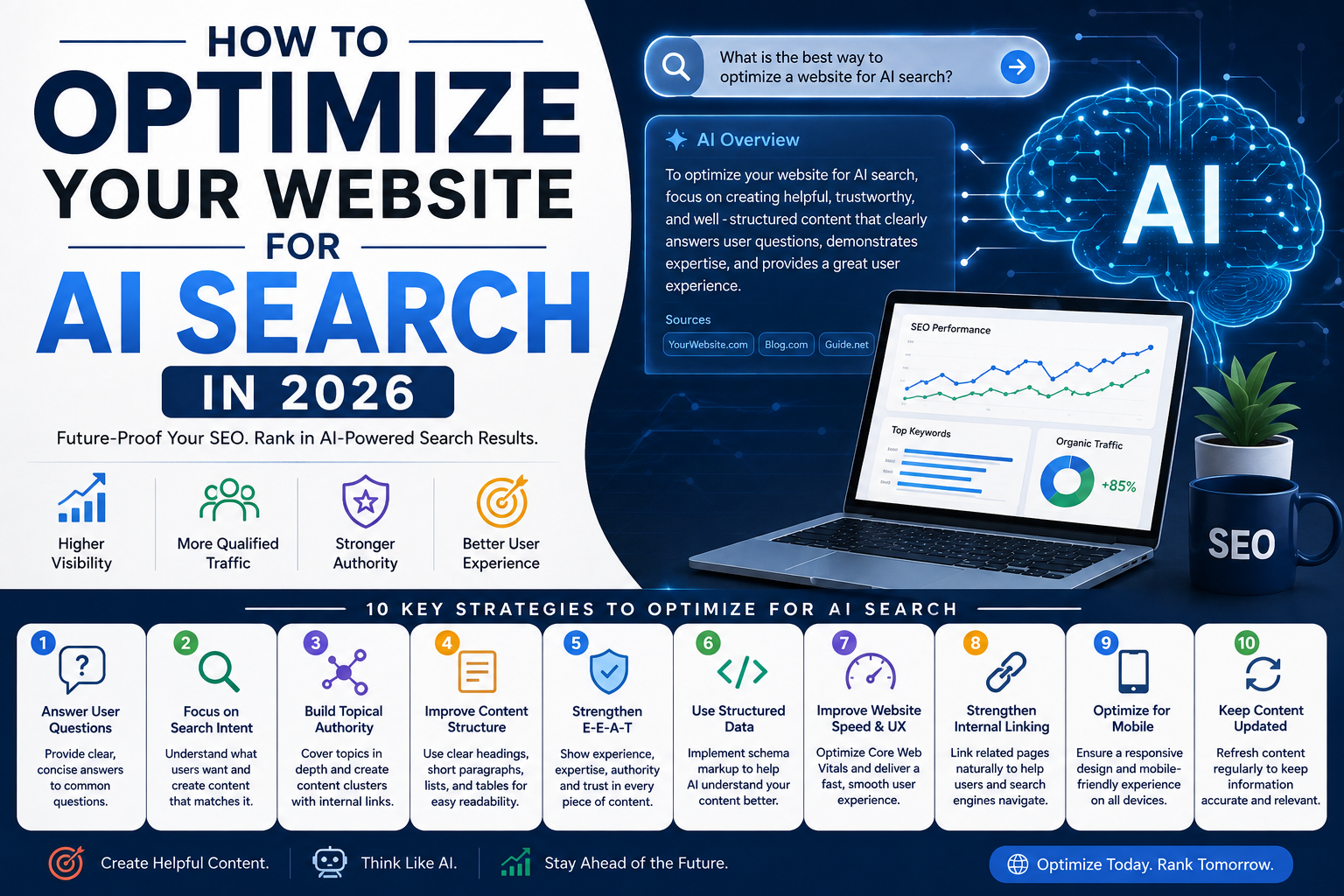
Key GEO Strategies for 2026
1. Create Helpful, Original Content
The foundation of GEO is high-quality content.
Instead of creating articles only to insert keywords, focus on answering the questions your audience actually has. Provide useful explanations, practical examples, comparisons, and original insights.
Content should solve a problem rather than simply repeat information that already exists online.
2. Understand Search Intent
Search intent refers to the reason behind a user’s query.
For example, someone searching for “what is GEO” wants an explanation, while someone searching for “best GEO agency” may be looking for a service provider.
Understanding intent allows you to create content that directly answers the user’s needs.
3. Use Clear Questions and Answers
AI systems need to understand information quickly.
Organize your content using descriptive headings and answer important questions directly.
For example:
- What is GEO?
- Why is GEO important?
- How does GEO differ from SEO?
- How can businesses optimize content for AI search?
- What are the benefits of GEO?
This structure also improves readability for human visitors.
4. Build Topical Authority
Publishing one article about GEO is not enough to establish strong topical coverage.
Create multiple related pieces of content covering different aspects of the subject.
For example, a digital marketing website could publish articles about:
- GEO vs SEO
- AI search optimization
- AI Overviews
- Generative search
- AI content optimization
- GEO tools
- AI search trends
- Content strategies for AI search
This creates a stronger content ecosystem around the topic.
5. Demonstrate Expertise and Trust
Trust is important in both traditional and AI-powered search.
Include accurate information, credible references, author information where appropriate, real-world examples, case studies, and original observations.
Avoid unsupported claims and misleading information.
Businesses should also keep important website information accurate and consistent, especially company details, services, contact information, and author credentials.
6. Optimize Content Structure
Well-structured content is easier for users and search systems to understand.
Use:
- Clear H1, H2, and H3 headings
- Short paragraphs
- Bullet points
- Numbered lists
- Tables where useful
- Descriptive URLs
- Relevant internal links
- Helpful FAQs
Avoid unnecessary repetition and overly complicated language.
7. Focus on Brand Visibility
GEO is not only about individual webpages. Brand authority can also play an important role in online visibility.
Businesses should build a consistent presence across reputable websites, industry publications, business profiles, and other relevant platforms.
The goal is to make your brand easier to understand and recognize across the broader digital ecosystem.
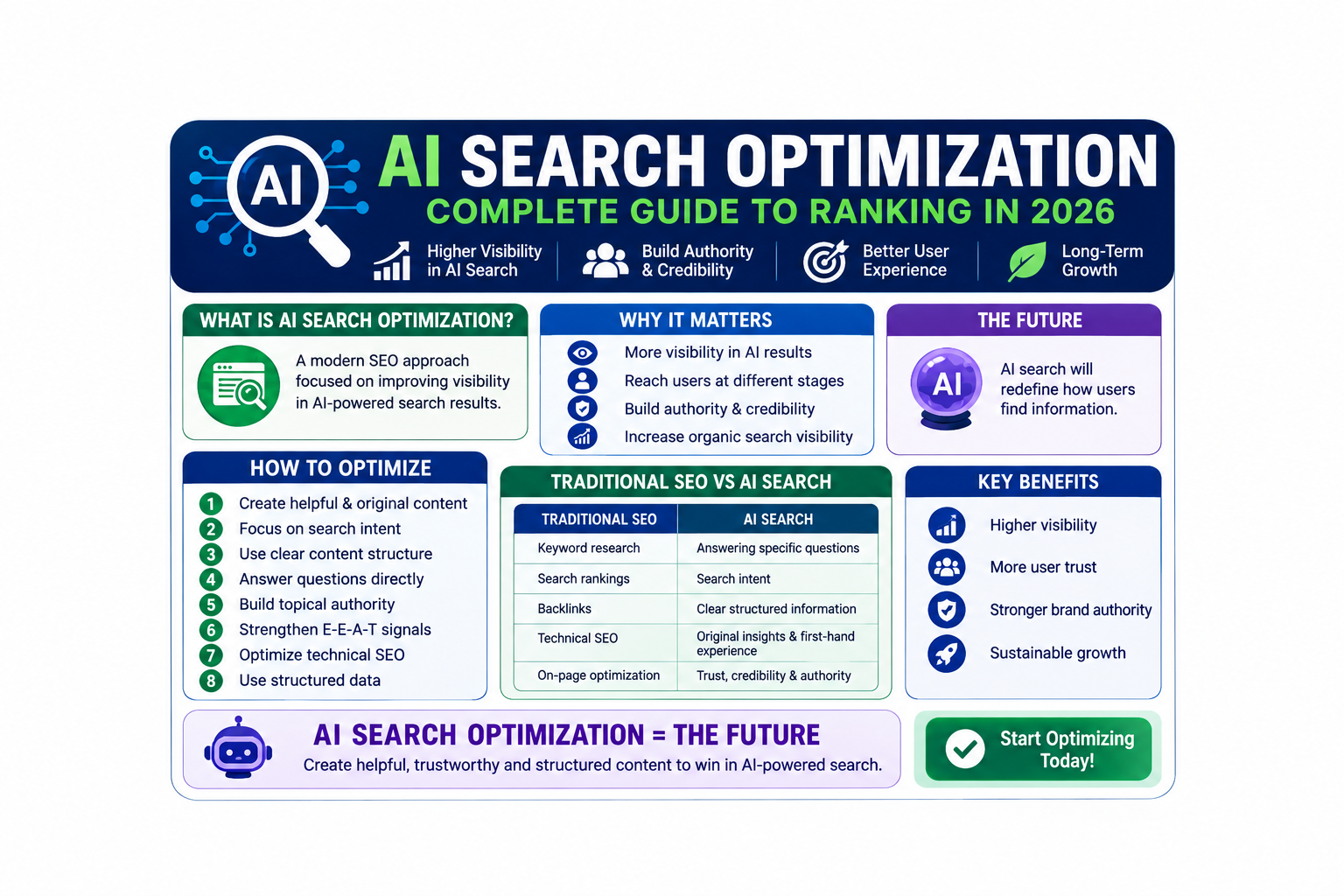
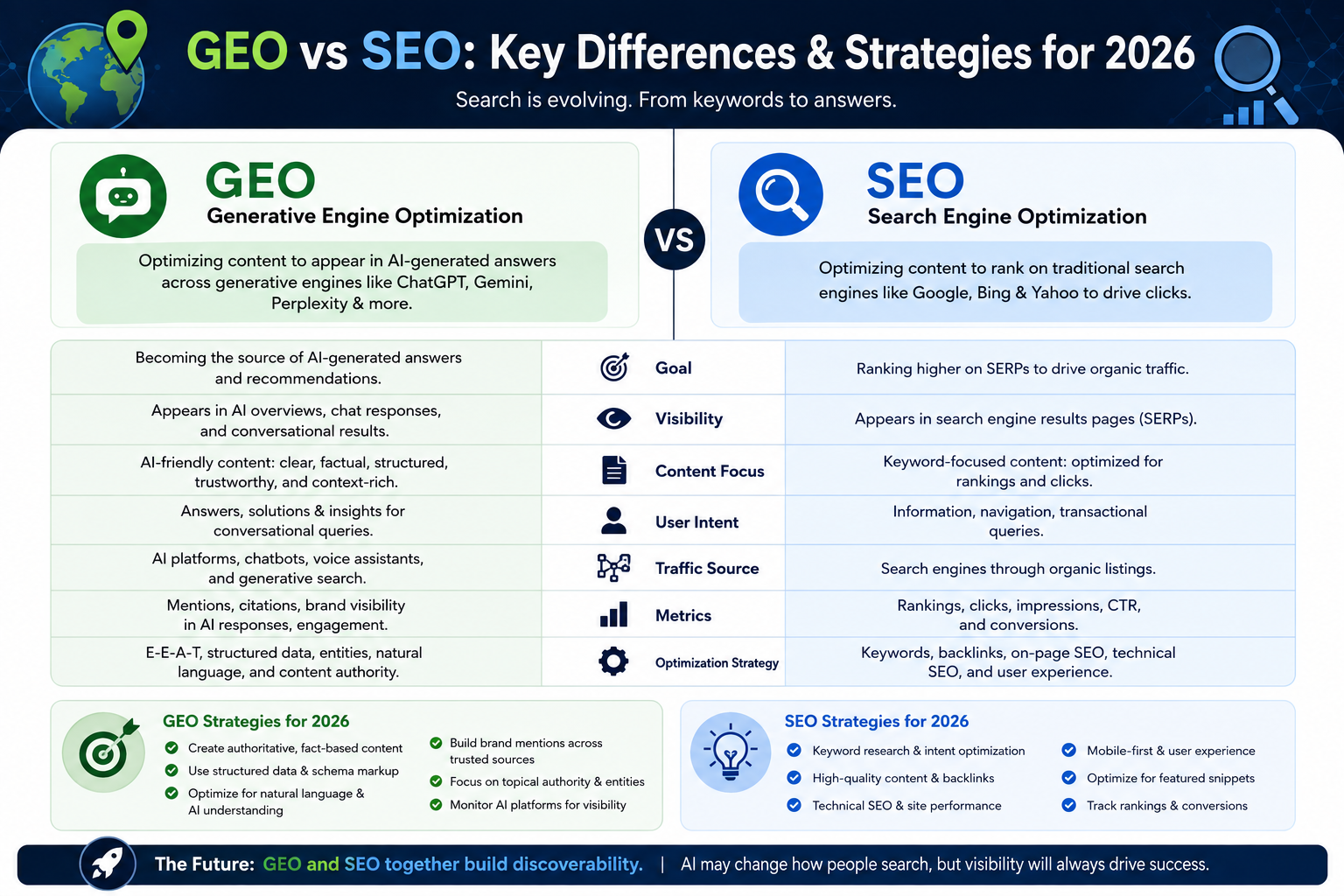
GEO vs SEO: Are They the Same?
GEO and SEO are related but not identical.
SEO primarily focuses on improving organic rankings and visibility in traditional search engines.
GEO focuses on improving the likelihood of being represented or referenced in AI-generated answers.
However, many SEO fundamentals remain useful for GEO. Technical website quality, helpful content, authority, internal linking, structured information, and strong user experience can support both strategies.
Therefore, businesses should not abandon SEO. Instead, they should combine SEO and GEO as part of a broader search visibility strategy.
Benefits of Generative Engine Optimization
A strong GEO strategy can provide several potential benefits:
- Greater visibility in AI-powered search
- Increased brand awareness
- Improved content discoverability
- Stronger topical authority
- Better alignment with conversational search
- Additional opportunities for qualified website traffic
- Better preparation for the future of search
The exact impact will vary depending on the industry, content quality, competition, and how AI search platforms evolve.
Common GEO Mistakes to Avoid
Businesses should avoid treating GEO as simply another keyword-stuffing technique.
Common mistakes include:
- Creating low-quality AI-generated content without human review
- Repeating keywords unnecessarily
- Publishing generic information
- Ignoring search intent
- Making unsupported claims
- Focusing only on AI instead of human readers
- Neglecting technical SEO
- Creating content without demonstrating expertise
The best GEO strategy is user-first. Content should be created to help people first while also being clear and understandable to search and AI systems.
The Future of GEO
Generative AI is likely to continue influencing how people search, research products, compare services, and make decisions.
As AI-powered search becomes more sophisticated, businesses may need to measure visibility beyond traditional rankings. Metrics such as brand mentions, citations, referral traffic, and AI search presence may become increasingly relevant.
However, the fundamental principle will remain the same: create useful, trustworthy, and relevant information that genuinely helps your audience.
Conclusion
Generative Engine Optimization (GEO) is becoming an important part of modern search strategy in 2026. It focuses on preparing content and brands for a search environment where AI systems can summarize information and provide direct answers to users.
GEO does not replace traditional SEO. Instead, it complements SEO by expanding the focus from search engine rankings to broader AI-powered search visibility.
Businesses that invest in helpful content, strong topical authority, clear information, technical SEO, and trustworthy brand signals can be better prepared for the evolving search landscape.
The future of search is becoming more conversational and AI-driven. By combining SEO and GEO, businesses can build a stronger strategy for reaching users wherever they search for information.