
Introduction
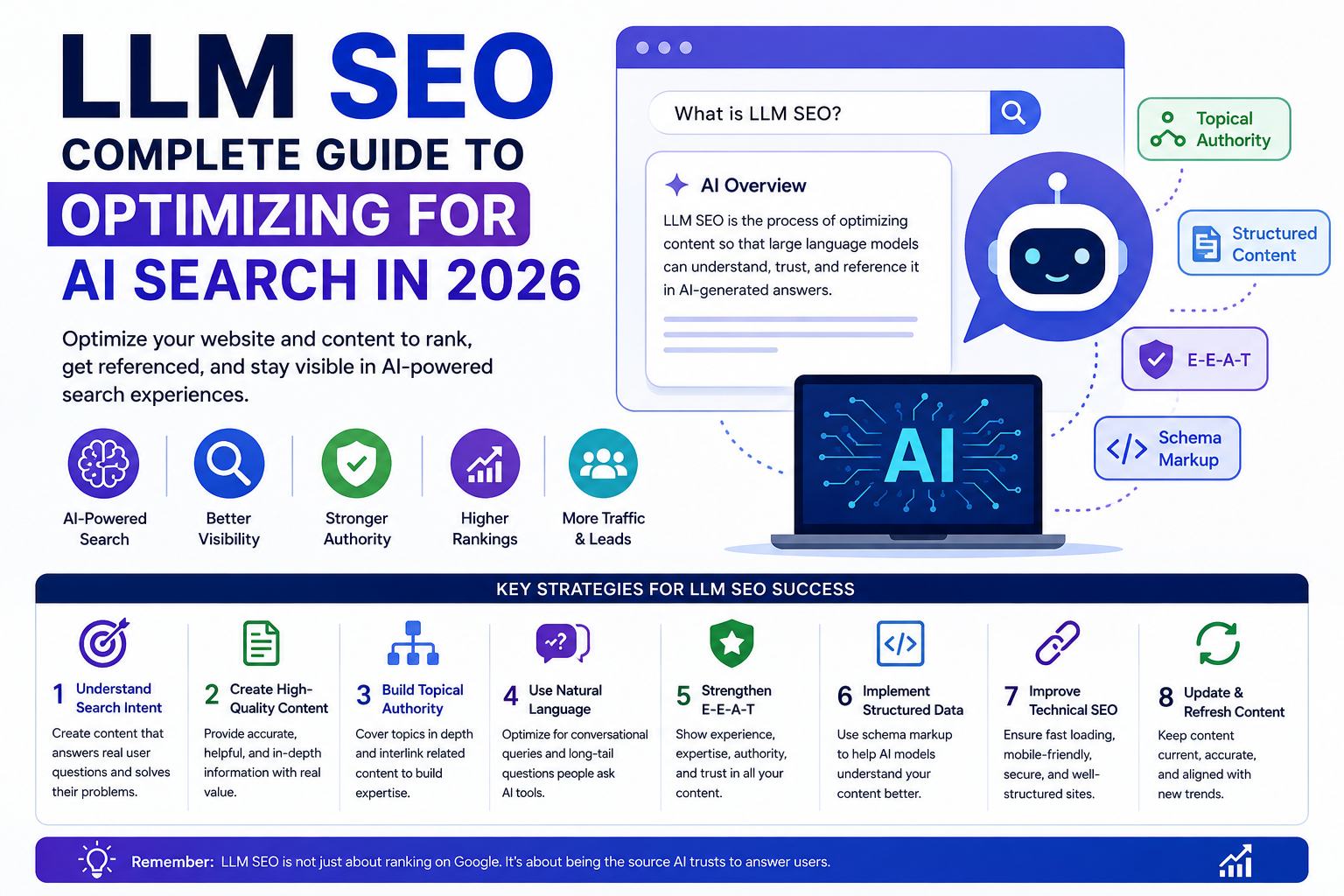
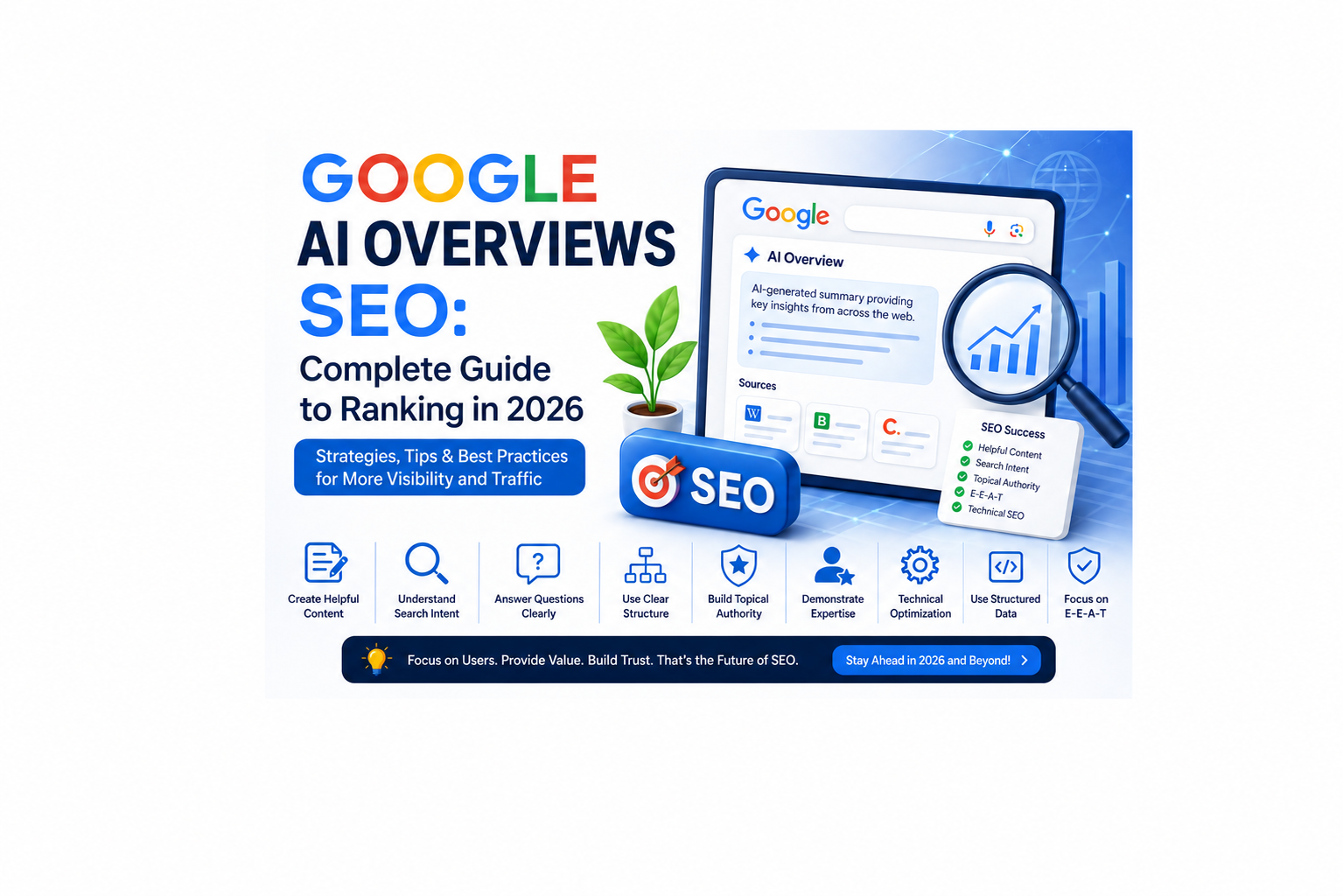
Search is evolving faster than ever before. Traditional search engines are no longer limited to displaying a list of blue links. Today, AI-powered search experiences can summarize information, answer questions directly, and recommend the most relevant sources based on context and user intent.
For website owners and businesses, this shift means that traditional SEO alone is no longer enough. To remain visible, your content needs to be optimized not only for search engine crawlers but also for AI systems that analyze, understand, and recommend content.
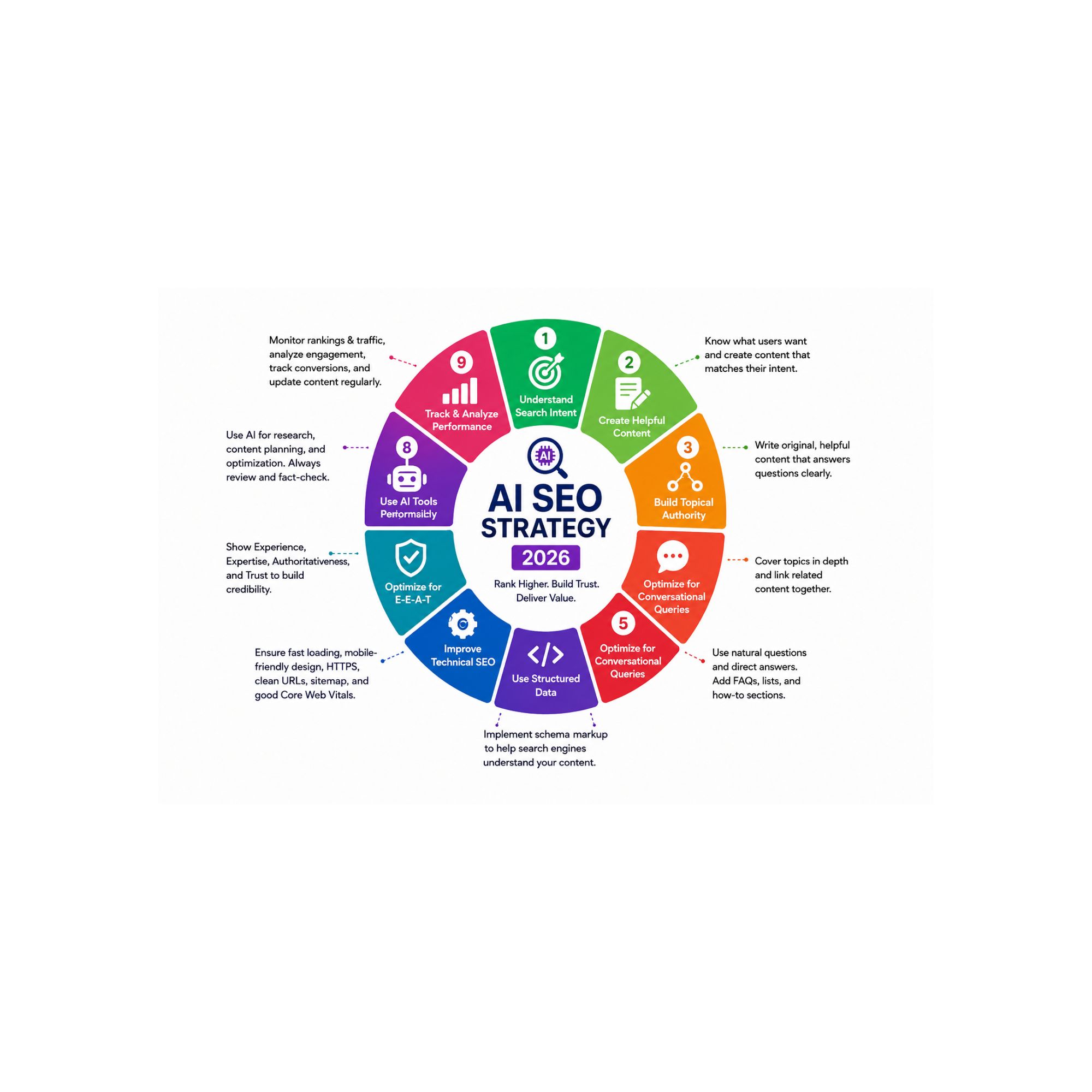
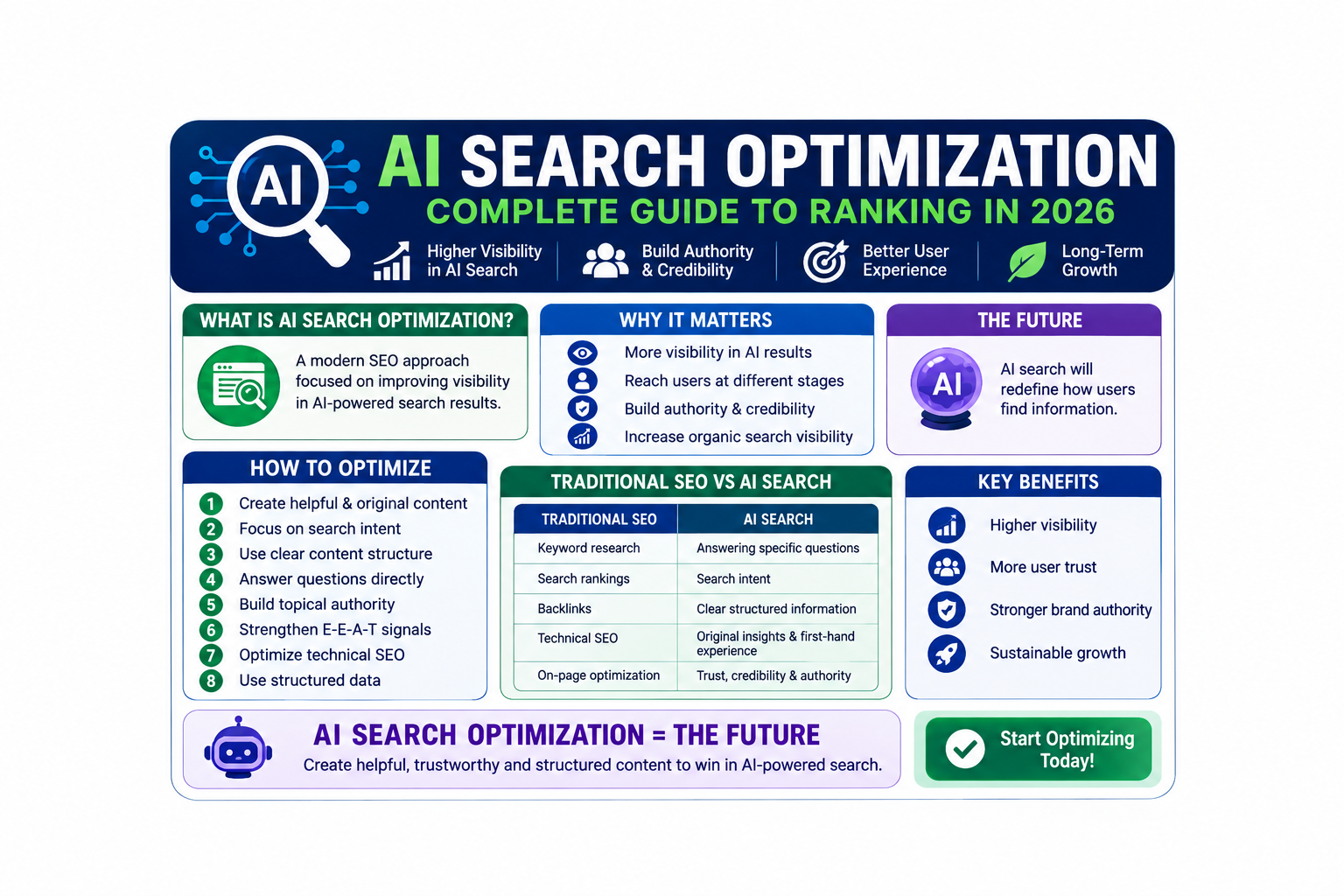
AI search optimization focuses on creating content that is accurate, well-structured, trustworthy, and easy for both users and AI models to understand. Websites that consistently publish helpful, authoritative, and user-focused content are more likely to be referenced in AI-generated search experiences.
In this guide, you’ll learn practical strategies to optimize your website for AI search and prepare your content for the future of SEO.
What Is AI Search?
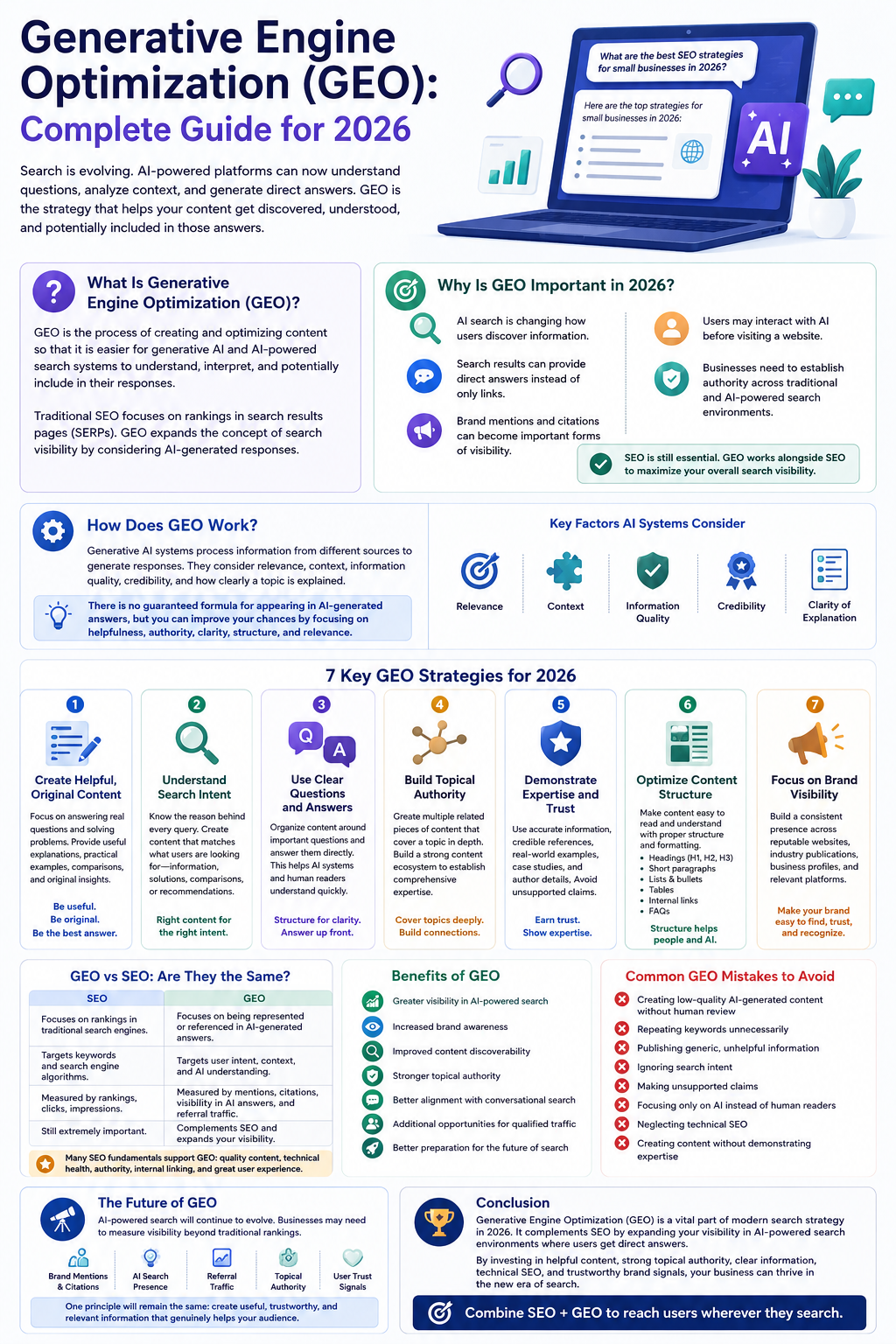
AI search refers to search experiences powered by artificial intelligence that understand user intent, analyze context, and generate direct answers instead of simply displaying a list of web pages.
Unlike traditional search, AI systems evaluate:
- Context behind a question
- Overall topic coverage
- Content quality
- Website authority
- User experience
- Trustworthiness of information
Instead of relying only on keywords, AI focuses on delivering the most useful answer for the user.
Why AI Search Optimization Matters
AI-powered search is changing how users discover information online. If your website isn’t optimized for these new search experiences, you could lose valuable visibility even if your pages rank well in traditional search results.
Optimizing for AI search helps you:
- Increase organic visibility
- Improve topical authority
- Build trust with users
- Earn more qualified traffic
- Stay competitive as search evolves
- Future-proof your SEO strategy
The goal is not to replace traditional SEO but to enhance it with practices that make your content easier for AI systems to interpret and recommend.
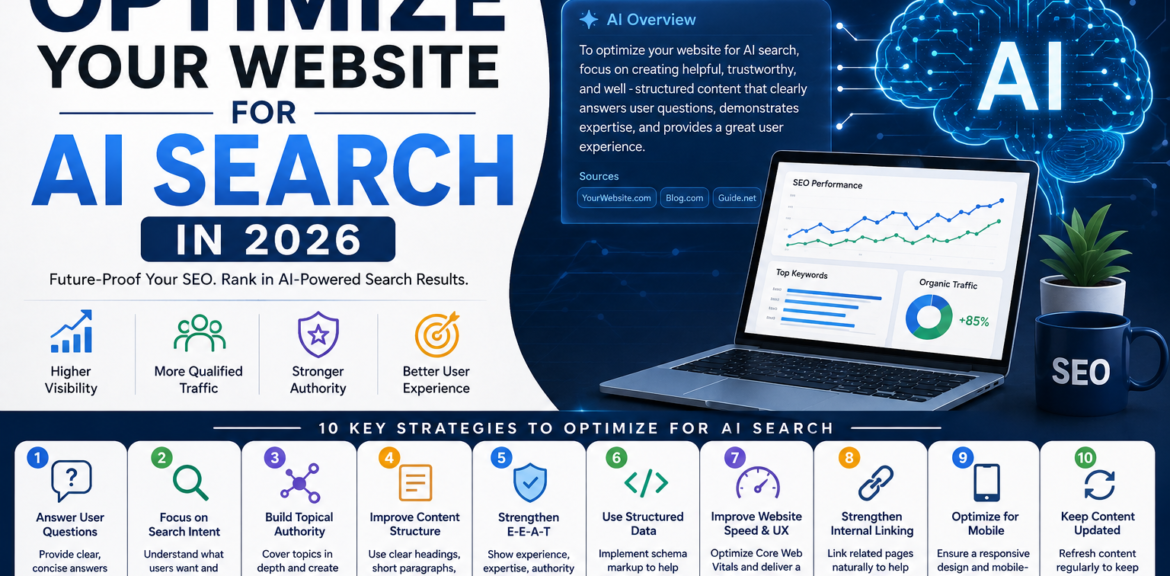
1. Create Content That Answers User Questions
Why It Matters
AI systems are designed to provide direct, accurate answers. They favor content that clearly addresses common questions rather than content filled with unnecessary keywords.
How to Optimize
- Research common questions in your niche.
- Use question-based headings.
- Provide clear, concise answers at the beginning of each section.
- Expand with detailed explanations, examples, and actionable advice.
- Include FAQ sections where appropriate.
When users ask, “How do I improve website speed?” your content should answer that question immediately before diving into deeper details.
2. Focus on Search Intent Instead of Keyword Density
Why It Matters
Modern AI understands the meaning behind a search query, not just the exact words used. Simply repeating keywords won’t improve your chances of appearing in AI-driven results.
How to Optimize
Identify the intent behind each keyword:
- Informational – Users want to learn something.
- Navigational – Users are looking for a specific website or brand.
- Commercial – Users are comparing products or services.
- Transactional – Users are ready to take action.
Create content that satisfies the user’s goal rather than focusing solely on keyword frequency.
3. Build Topical Authority
Why It Matters
AI systems prefer websites that demonstrate expertise across an entire subject instead of publishing isolated articles.
For example, a single blog about SEO is less valuable than a website that covers keyword research, technical SEO, on-page optimization, local SEO, link building, AI SEO, and analytics.
How to Optimize
Develop topic clusters around your primary niche.
If your business focuses on SEO, create detailed content about:
- Keyword research
- Technical SEO
- Local SEO
- On-page SEO
- Off-page SEO
- Core Web Vitals
- Google Search Console
- AI SEO
- Content marketing
Connect these articles with strong internal links to help users and search engines navigate your content.
4. Improve Content Structure
Why It Matters
AI systems can better understand content that is well organized and easy to scan.
A clear structure also improves the user experience.
Best Practices
- Use one H1 heading.
- Organize sections with H2 and H3 headings.
- Write short paragraphs.
- Use numbered steps where appropriate.
- Include bullet points for important information.
- Add summary sections for complex topics.
A logical structure makes it easier for both readers and AI systems to extract key information.
5. Demonstrate Experience, Expertise, Authority, and Trust (EEAT)
Why It Matters
Google emphasizes EEAT when evaluating content quality, especially for topics that impact finances, health, or important life decisions.
Even for general topics, demonstrating credibility increases user trust and supports long-term SEO performance.
How to Improve EEAT
- Publish accurate, well-researched content.
- Clearly identify the author or business.
- Keep information up to date.
- Use original examples and practical insights.
- Maintain an informative About page and Contact page.
- Ensure your website uses HTTPS for security.
Trustworthy content is more likely to be recommended by AI systems.
6. Optimize for Featured Snippets and AI Summaries
Why It Matters
AI-powered search often pulls information from pages that answer questions clearly and concisely.
How to Optimize
- Answer questions within the first few sentences.
- Write clear definitions.
- Use step-by-step instructions.
- Create comparison tables when relevant.
- Add FAQ sections to important pages.
Well-structured answers improve the likelihood of being referenced in AI-generated summaries.
7. Implement Structured Data
Why It Matters
Schema markup helps search engines understand the context of your content.
Although schema alone doesn’t guarantee higher rankings, it provides additional information that supports search visibility.
Recommended Schema Types
- Article Schema
- FAQ Schema
- Organization Schema
- Breadcrumb Schema
- Product Schema
- Local Business Schema
- Review Schema
Use structured data that accurately reflects the content on each page.
8. Improve Website Speed and User Experience
Why It Matters
Fast-loading websites provide better user experiences and support stronger SEO performance.
AI systems also consider signals related to usability and engagement.
Optimization Tips
- Compress images.
- Reduce unnecessary scripts.
- Enable browser caching.
- Choose reliable hosting.
- Improve Core Web Vitals.
- Ensure responsive design across devices.
Visitors are more likely to trust and engage with websites that load quickly.
9. Strengthen Internal Linking
Why It Matters
Internal links help search engines and AI systems understand the relationship between your pages.
They also encourage users to explore additional content.
Best Practices
- Link related blog posts naturally.
- Connect service pages to educational content.
- Use descriptive anchor text.
- Create pillar pages that link to supporting articles.
A strong internal linking strategy improves topical authority and crawlability.
10. Keep Content Updated Regularly
Why It Matters
AI search favors current and relevant information. Outdated articles may gradually lose visibility as newer, more accurate resources become available.
How to Keep Content Fresh
- Update statistics and examples.
- Refresh screenshots.
- Add new sections.
- Improve readability.
- Remove outdated information.
- Expand FAQs based on user questions.
Regular updates signal that your content remains valuable and reliable.
Common Mistakes to Avoid
Many websites struggle with AI search visibility because they:
- Focus only on keywords instead of user intent.
- Publish duplicate or low-quality content.
- Ignore content updates.
- Have weak internal linking.
- Provide poor mobile experiences.
- Overuse AI-generated text without human editing.
- Neglect technical SEO and website performance.
Avoiding these mistakes improves both traditional SEO and AI search readiness.
Best Practices for Long-Term AI Search Success
To build a website that performs well in AI-powered search, make these habits part of your content strategy:
- Publish original, helpful content consistently.
- Answer real user questions in depth.
- Build authority within your niche.
- Improve website speed and usability.
- Monitor technical SEO issues regularly.
- Update important pages throughout the year.
- Strengthen your internal linking structure.
- Focus on quality rather than quantity.
A long-term approach will always outperform short-term SEO tricks.
Frequently Asked Questions
What is AI Search Optimization?
AI Search Optimization is the process of improving your website so AI-powered search systems can better understand, evaluate, and recommend your content. It combines traditional SEO with high-quality content, strong site structure, and a focus on user intent.
Does AI Search replace traditional SEO?
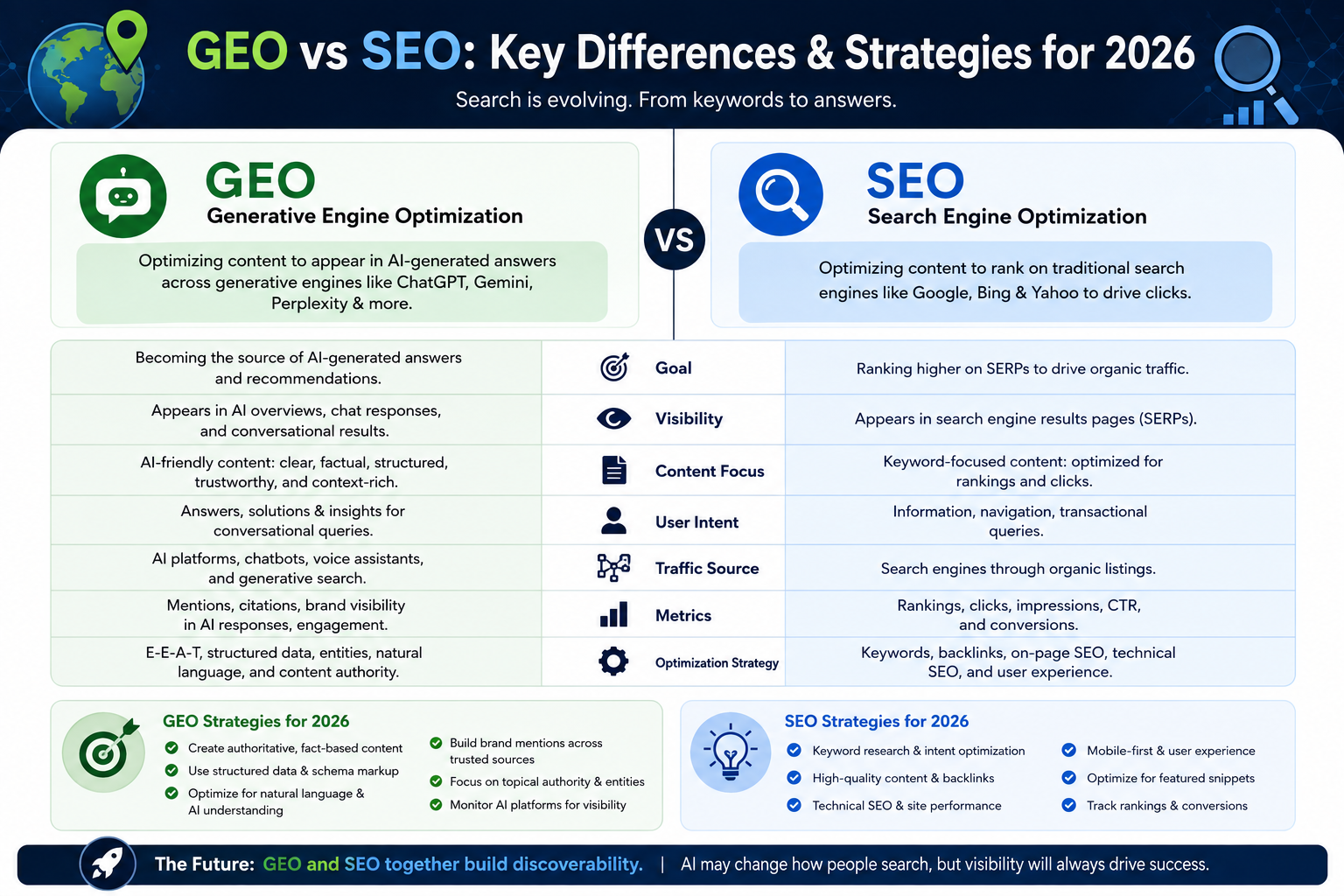
No. Traditional SEO remains important, but AI search optimization builds on those fundamentals by emphasizing content quality, authority, and context rather than keyword repetition alone.
Can AI-generated content rank in search results?
Yes, provided it is accurate, original, reviewed by humans, and genuinely helpful. Low-quality or unedited AI-generated content is unlikely to perform well over time.
How can I prepare my website for the future of search?
Create helpful content, build topical authority, improve technical SEO, use structured data, optimize for mobile devices, and regularly update your content. These practices position your website for both traditional and AI-driven search experiences.
Final Thoughts
AI search is reshaping how people discover information online, but the core principle of SEO remains the same: create content that genuinely helps users. Instead of chasing algorithm changes or relying on outdated optimization techniques, focus on delivering accurate, well-organized, and trustworthy information that answers real questions.
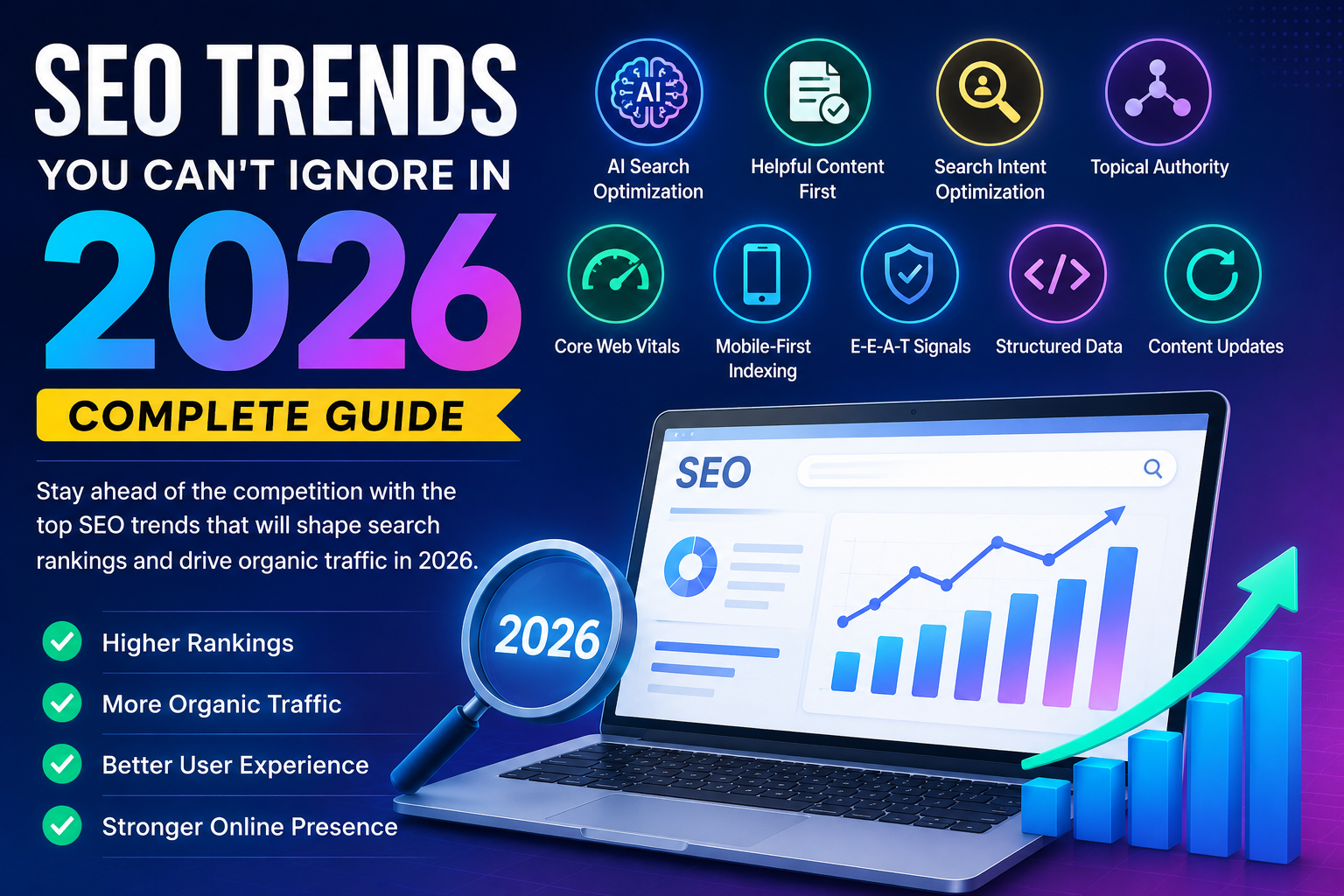
By understanding search intent, building topical authority, improving website performance, and maintaining high-quality content, you can increase your chances of being recommended in AI-powered search experiences while continuing to perform well in traditional search results. Businesses that adapt today will be better positioned to grow their visibility, attract qualified traffic, and succeed in the future of search.